
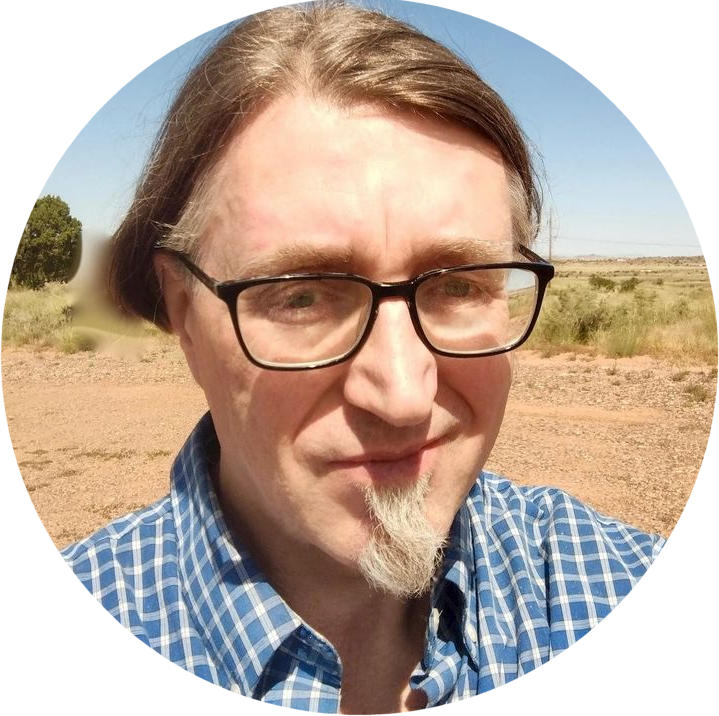
Mark is a former IT professional turned entrepreneur and writer (haiku, fiction, and non-fiction). He is the founder of SelfHelpNirvana.com, Toolarium.club and the Holiday Reminder Alerts service.
Describe yourself in five words.
Introverted, unconventional, thoughtful, unfocused.
What fact about yourself would really surprise people?
That I moved from the UK to the USA to be with a woman I’d never met in person and only saw a photo of one month before I moved.
How do you work through self-doubts and fear?
I don’t, at least, I don’t do it well. I am better with someone who is close to me with whom I can discuss problems.
What scares you the most?
Losing my girlfriend.
What makes you happiest?
Being with my girlfriend.
What books did you enjoy growing up?
Action/adventure stories, Sherlock Holmes, puzzle books, magic (of the conjuring variety) books, humorous stories, encyclopaedias, and pretty much anything, really.
What do you hope your obituary will say about you?
I hope that my obituary will say I was a kind and gentle man.
Where are you from?
I am originally from a city called Preston, in the UK, but I now split my time between Arizona and New York.
Why do you write?
I write mainly because I enjoy it, but also because I want to start earning some money from writing.
What do you write about?
On the business side, I mainly write self-help articles and technology-based information / product reviews.
For enjoyment, I focus on haiku, although I have written a novel and a lot of flash fiction stories. I also write on both Medium and Substack.
Do you have a specific writing style?
I would say it’s a fairly informal style.
What’s the most memorable thing asked/said by a reader about your work?
A fellow author wrote a review of my Haiku For Beginners book on Goodreads, and said: “For anyone interested in writing Haiku, whether they be beginners or experienced Haikuists, Mark Stuart’s book is essential reading. It has been a pleasure to read and my understanding of this intricate form of literary expression has been expanded dramatically.”
How long have you been writing?
I wrote my novel in 2011, and have written sporadically since then, but most of my work has been created during the past three or four years.
When did you first realize you wanted to become a writer?
It was in the 1990s that I had this urge to write a full-length novel that featured a magic square (another interest of mine). However, I didn’t get around to that until 2011, and I found I enjoyed the challenge. Most of my professional work has been in the information technology industry, which is not what most people think of as being creative, although it is, in a way, but I wanted some outlet to try to develop my creativity, and writing was what felt like the most natural avenue to pursue.
How do you write – laptop, pen, paper, in bed, at a desk?
I often write my haiku on my phone, but everything else is done on my laptop – I hate writing by hand (mainly because I’m a left-hander but also because it’s so slow compared to typing), and always have done since I was a child at school and had to use a dip pen (which is not great for us left-handers).
What is your work schedule like when you’re writing?
When writing my novel, I spent one hour a day on that, but these days, I don’t really have a schedule. I write when I get ideas, or when I want a break from programming and creating websites, because I don’t have the luxury of devoting several hours a day to it.
What would you say is your interesting writing quirk?
If I have one, I would say it’s having fun with the English language. For example, I love plays on words, and double-meanings.
How long does it take to write a book?
I spent one month planning my 400+ page novel, about three months writing it, and one month editing it and getting it ready for publication. Every other book I’ve written has been much shorter, so some books (e.g., How To Memorize 101 Digits Of Pi In Less Than A Day) have only taken me a few days.
Do you have suggestions on how to become a better writer?
Write as much as you can. Try different styles to see what you enjoy most. Publish whatever you can somewhere, because to improve you need to receive feedback, either from readers or fellow writers (or both). And, as almost every successful author has already said, read – lots!
What challenges do you come across when writing / creating your story?
I’m not a great planner, but I knew if I didn’t plan my novel I would never get it finished, which is why I chose to do a highly detailed outline of my novel, which helped tremendously. Fortunately, this is less of an issue with the shorter books, although I did spend a lot of time creating the structure of my Haiku For Beginners book, because I wanted it to be laid out as a course, split into several modules. Another challenge is my ADD, which makes it difficult to stay focused for very long in one session. And lastly, making the time to write given I have higher priorities.
What do you think makes a good story?
If we’re talking fiction, then it should have credible characters, good dialogue, an interesting storyline without too many subplots, and it should be well-written (bad English really yanks me out of the story). For non-fiction, it needs to be written in easy-to-understand terms and it should be structured logically, so that each chapter builds on the previous ones.
What does your family think of your writing?
I never had much of a family, and most of them had died before I really started writing. My late wife was not particularly supportive of my desire to write a novel, but I got it done. My current partner is very supportive, although she doesn’t let me forget that I have higher priority tasks I should focus on first.
Do you see writing as a career?
In some ways, it already is – I write for several of my own websites. But in the usual meaning of the question, I am not sure I would want it to be my full-time job, although that doesn’t mean it won’t. It definitely can be a career, though – one of my friends started writing novels a few years ago and was able to give up his day job and now spends all his time writing.
Do you have anything specific you’d like to tell the readers?
I think it’s good to read books that are outside your usual genres, because it helps open your mind to alternative perspectives. This applies both to fiction and non-fiction. Try not to have too many books on the go at once. Don’t be afraid to give up on a book after a reasonable time if it’s really not working for you – you’re not at school any longer and you get to choose what you read, and why.
When did you first consider yourself a writer?
Probably when I completed my novel, in 2011.
What marketing works for you?
I don’t know – I really suck at and dislike the marketing side of business and writing.
Tell us about your new book? Why did you write it?
My latest regular book is called Haiku For Beginners: A 15-Module Introductory Course On The Japanese Art Of Haiku. I wrote it after learning the art of haiku over several years, and I wanted to impart that accumulation of knowledge and experience to others who want to write haiku but don’t know where to start. I don’t claim to know it all, because I am still learning, but I believe my book contains more than enough to get people going with both basic and some advanced techniques.
What do you hope people will take away from your writing? How will your words make them feel?
I hope, when they read Haiku For Beginners, that they will gain the confidence to start writing and publishing their own haiku. The course / book has a variety of exercises to help them develop their skills, and a Facebook group where they can share them so they can receive valuable feedback (both from me and from other students of this course).
When you are not writing, how do you like to relax?
When I’m not writing or working, I like to go for walks with my girlfriend, read together, watch movies, and play games.
 International Book Promotion