An author interview with Denis Brown

Denis Brown
Denis Brown

A Beautiful Mind Is Poetry Defined, brings you warmth, passion, heart, and more importantly storytelling in a refreshingly creative way.

The writer delves into the crux of what it means to be a human living in a turbulent and ever-pressing world. With humour in some of its undertones, this collection of poems comes from the unique inspirational mind of Denis Brown, who believes that poetry is the outward expression of an inward emotion.

Poetry is the inner voice that captures both jubilation and frustration, that wrestles with the enemies within. Whether angel or demons, your heart would sing. It’s the score of music of your life, filled with victories and filled with strife. It’s the silent chamber of your mind, where you as a person are defined.

With a deep sense of passion expressed in current topical issues and life in its entirety. His aim was to fan the flames of poetry once again. To release his inspiration, and energy into looking at life with new purpose new vigour, not just to take everything on the chin, but to stand up and be counted, to speak up and say, how he feels about his world today.

We are by far the most creative all of all the species known to man. There is nothing that we cannot do. This is what inspired me to write a book on poetry to be read by you. Thank you for hopefully touching your life in a real and wonderful way.

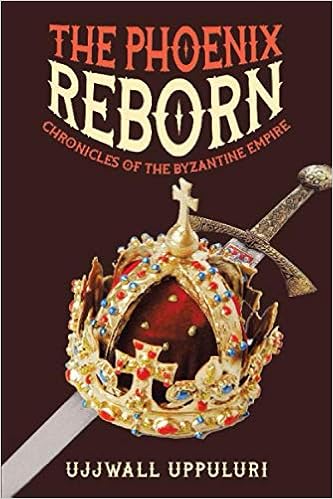
A book by Denis Brown

Where are you from?

I was born in Calcutta India back in 1960

Why do you write? 

Mainly because I would like to feel inspired, or have something to say on an issue, or a particular matter. Sometimes it’s driven from passion, frustration, even anger. It’s a means of expressing ourselves.

What do you write about? 

Nearly anything and everything, for instance the injustice of Harry Dunn the young lad who was knocked off his motorbike and killed. Ghislaine Maxwell, Jeffrey Epstein, Harvey Weinstein, Robert R. Kelly to name just a few. Churchill, Piers Morgan, Tara Arkle, Belly Mujinga… I also write about the bigger issues in life, like the Amazon Rainforest, or other Eco issues that we will soon be facing. For instance, “Permafrost” , The “Doomsday Glacier” that has recently been calved, A68a that has broken off and is putting eco systems at risk.

Do you have a specific writing style?

I have a mixture I would like to think. As I like light-hearted stuff as well. For instance, the W.H.O. is nothing short of being a white elephant in the 21st Century so I wrote it as a sketch to be performed as a comedy act. I also imagine what the future is likely to bring us, and that can be quite eerie. I’m not a prophet not would I claim to be one, but if you read some of my stuff, it will leave you questioning.

What are obstacles that come in the way of writing? 

Far too many to mention here, but just to give you an example. Prejudice, and set views will always remain at the top. Barriers like stigma, and taboo, even down to religion too is on the list. One of the greatest barriers is trying not to offend anyone give group within your audience. It’s nearly impossible. Especially if you’re a writer who shoots from the hip.

What’s the most memorable thing asked/said by a reader about your work?

When’s the next book coming out and let me know when it does!

How long have you been writing?

Since school, but I got more seriously into in my early twenties, thirties, forties, fifties and now sixties.

When did you first realize you wanted to become a writer?

Last year really, and it caught me off-guard to be honest. Some people find it very natural to just drift in and before you’re know it, they are writing for all of England. But for me it was weird. I found myself having to defend a poem that I had written because of a term that was used that people thought was in appropriate. This poem is called “Tick Tock“ and it is the first poem that I put out there first. It’s a super little poem that describe life in under 60 seconds and that is the challenge I gave myself when I wrote the piece.

What is your work schedule like when you are writing?

Chaotic, and scary because when inspiration comes you don’t get to press the snooze button so to speak or wrap your pillow around your head and say go away to it! It’s quite infuriating but you always feel better for having done it afterwards. Even if it’s at 02:30am in the morning.

What would you say is your interesting writing quirk?

As Einstein once said imagination is better than knowledge, now here’s a guy who is really smart and I have got the greatest respect for the man. In fact, I wrote a short story that he’s in called the Philadelphia Experiment. It goes way further than the original film does. The other quirk is that I can literally write about anything. For example “Cardboard” is one of the poems in my book “A Beautiful Mind is Poetry Defined” “Hair” is hilarious!

How long does it take to write a book?

ABM = A Beautiful Mind is Poetry Defined, actually took 40 years of my life to research and less than a year to write from start to finish. ABM, is quietly sitting in the wings as with another project of mine that will take the world by storm.

Do you have suggestions on how to become a better writer?

Yes’, pay more attention in your English classes, and strive to be the best, look at what other writers are doing and get a sense of what the world is craving for at this time. I didn’t do any of that. I think it was down to arrogance and ignorance, coupled with an ego the size of a small planet, not even sure if stupidity is somewhere lurking in the background, at that is also likely. But, heck what a journey. Now I know what it means when they say out of the frying pan and into the fire!
Author Interview with Lisa Fedel

Lisa Fedel
Lisa Fedel

I just your average font fanatic English major who has a traumatic brain injury and an interest in everything serial killer, conspiracy theory, and veganism. And I would definitely know what to do if the zombie apocalypse happened tomorrow.
What am I like as a person? Imagine if Benson from The Regular Show and Q from Star Trek had a baby. That would be me. I like order and need things to be done a certain way by a certain time, but if there’s nothing going on or I have time to myself, chaos is my thing. Which is why I love writing, to be honest. There’s order in how one writes a book, but having full control as an author allows me to do whatever I want to whomever I want.

Where are you from?

I grew up in Ann Arbor, Michigan and I went to school in Adrian, Michigan.

What fact about yourself would really surprise people? 

I’ve lived a strange life, having gotten a traumatic brain injury at the age of five. I think this is reflected in my writing in a lot of ways. 

Why do you write? 

I try to write stories based upon my own life, though the plot might not be anything like I’ve lived through. 

Do you have a specific writing style?

I’d describe my writing style as fairly casual, so even though my book may be a few hundred pages long, it won’t take forever to read the entire thing. I’m all about entertainment and character development.

What are obstacles that come in the way of writing? 

For me personally, fatigue gets in the way of my writing. Whether it be physical or emotional, when I get burn out, I get burn out. It’s especially bad if I’m out at a coffee place, since I’ll need to get myself home and coffee doesn’t do much in terms of giving me energy.

Another issue I come up against is perfectionism. I suffer from obsessive compulsive disorder (actually I enjoy every minute of it), which kind of explains a lot about what I go through when I’m writing: if I don’t know I can do something 100%, I just won’t start on it at all.

What’s the most memorable thing asked/said by a reader about your work?

If you look at the first page of my book, you’ll see I dedicated my book to a college friend. I was giving her a ride to the ice cream place one day, and she asked if she could take a look at the thing I’d been working on. Fully expecting she’d think it was terrible, I gave her my laptop and tried to focus on the road. She got through a good chunk of it and exclaimed how much she was enjoying it. Every time she and I hung out after that, she’d ask when she could read more of it. That feeling never left me, even after spending three years after graduation going to school for something completely unrelated to writing.  At some point, I just felt like it was my purpose in life to finish and publish my book so that she could see what it became.

How long have you been writing?

I’ve always loved writing, but I think I really got serious about it in middle school when I started working on a story in which I went back (as a tween) to my childhood to stop a traumatic event from happening. At some point, I had to stop working on that because I knew it was fictional and I was stuck in the situation I was stuck in, but I discovered that I enjoyed the ability to create a world and a situation that had never happened.

Book by Lisa Fedel

When did you first realize you wanted to become a writer?

So, when I was little, I decided that I wanted to be “famous” when I grew up. I mean, I know being an author doesn’t guarantee that, but I took what I love and ended up doing it. The funny thing is I had fully planned on being a stand up comedian for quite a few years, but then after writing my zombie novel, I realized that working in horror was much closer to my heart.

What is your work schedule like when you are writing?

When I’m hard core in writing mode, it’s basically the only thing I do. I’ll take breaks every now and then to watch something on Netflix or Hulu, but whatever I’m writing will always be in the back of my mind, and I’ll keep pausing whatever I have on in order to work on whatever idea pops into my head that I like. There was one time I was on a 7 hour train ride, working on the final draft of my book, and I got an incredible amount of work done that didn’t save because I didn’t have internet access, but since I was in such a writing phase, it was pretty easy for me to duplicate what I had done.

What would you say is your interesting writing quirk?

I write the characters before I write the story. When I was plotting out my first book, the first thing I did was write down the names of the characters, what their job was, their relationship status, and what their quirk was. That way, as I was writing and would have a character do a certain thing, I could plug in the name of whatever character was most likely to do that based upon personality. It does eventually turn into writing short stories about them earlier in life, but that’s also something we had to do for some college classes.

How long does it take to write a book?

So unfortunately I have a plethora of medical conditions, so I might declare one day “I’m going to get x amount of stuff done tomorrow” but then wake up to find my body isn’t up to that because I have to go to urgent care, or I haven’t waken up in time to do anything productive. That being said, I do have a lot of motivation when I want to do something, so just because I have one off day doesn’t mean I won’t get more done the next day that might be even more than I would have gotten done the day before if I hadn’t been sick.

My first (and only so far) book required four years to write, but I didn’t really know I was going to publish, so didn’t put a lot of care into it being great for the first draft, and I was still in college at the time. If it had been my one and only focus, I believe I could have gotten it finished much sooner, as I’m hoping I can for my future novels I plan to write.

Do you have suggestions on how to become a better writer?

I learned that it’s important to go with the flow. When I started writing my book, I had planned on a straightforward horror novel, but it became more of a satire in the vein of the John Dies at the End series. To me, this made it more fun to write (although like they teach in improv classes, the funny came naturally and didn’t need to be forced) and helped set me up with the opportunity to do a series. More serious horror novels tend to have a real closer at the end, whereas in my book, I left some things unanswered, which hopefully means readers would look forward to my future books. Also, there were certain characters I really liked, but in a zombie novel, people die.

What do you think makes a good story?

I think in order to write a good story, you need to write characters with whom your reader can connect. A guy working a boring job to pay the bills, or a mother who has a kid with a lot of health problems. Just normal people who aren’t particularly talented but have that one thing they really care about that keeps them going.

What does your family think of your writing? 

When I first declared that I wanted to be an author, the family gave the “not everybody is as successful as Stephen King or Dean Koontz” lecture. They preached this in college as well, and that wasn’t really why I wanted to do it, so I just dove deep into my work and wrote the best book that I could. Now that the book is published and my family has read it, they are incredibly supportive and I think they realize that their hesitancy of my doing this wasn’t helpful or necessary.

Author interview with Sean Clarke

Sean Clarke

Sean Clarke is an author, blogger and freelance writer who lives in Saltcoats, Ayrshire.

He writes fantasy and supernatural horror fiction.

When he’s not writing, Sean enjoys gaming, swimming, and spending time with his family and friends.

Describe yourself in five words

Ambitious, Imaginative, Reliable, Funny, Creative.

What fact about yourself would really surprise people? 

Hmm, that’s a tough one. I love musicals. My favourite is Grease. Although I have a soft spot for Calamity Jane and the Sound of Music.

How do you work through self-doubts and fear? 

Sometimes, I get motivated by self-doubt and fear, but other times it can be debilitating, and I’ll have no choice but to wait until it passes. Support from others is a big help when this happens.

What scares you the most?

The prospect of eternal darkness after we die, oh and spiders!

What makes you happiest?

Being a good dad and stepdad.

Why do you write? 

It’s hard to explain. I guess for me, it’s like an addiction. I love putting words on a page, telling stories, creating characters and putting my innermost thoughts for others to read. It helps to make sense of my jumbled up thoughts and feelings.

Have you always enjoyed writing?

By and large, yes. There was a period in my life where everything was chaotic and I didn’t have the energy, but I missed writing everyday. It’s a process that has always made sense to me in some way. Once I sorted myself out, I returned to writing in a big way.

What motivates you to write? 

I treat my daily writing as a job. Being passionate about a particular subject will usually get me writing in no time. In terms of fiction, I get an idea and I can’t get it down quickly enough. If I’m out and about I’ll record my ideas into the voice recorder in my phone. I often wonder if people think I’m talking to myself.

What writing are you most proud of? 

My debut novel, Cresmore: The Lost Elmkey. It’s a wonderful mix of fantasy and science fiction that took me six years to complete. I learned so much during those six years that will stand me in good stead for the future, but proving I could go the distance and complete a full-length novel makes me feel proud. I proved a lot of people wrong as well so that’s a bonus

What are you most proud of in your personal life? 

That’s an easy one. My two kids, Jodi (16) and Kyle. (6)

What books did you love growing up?

I was obsessed with the young-adult X-Files books which were written by Les Martin. Each one was based on a particular episode. (and a lot less scary) Also, Jurassic Park and The Lost World by Michael Crichton. I remember my sister bought the goosebumps books and although I pretended to hate them, I would read them in secret. They were fantastic.

What do you hope your obituary will say about you? 

He couldn’t play the piano but my goodness, give him a microphone and he was some chanter.”

Location and life experiences can really influence writing, tell us where you grew up and where you now live? 

I grew up in Ardrossan which is a small town in Ayrshire, Scotland. It’s a fantastic place where you can get a ferry to the Isle of Arran, take a stroll along the beautiful promenade at South Beach, or check out the ruins of a medieval castle. Ardrossan has a very interesting history. The people are generally lovely as well. Nowadays, I’m living in Saltcoats which is also a great wee town. Even so, I’ll always be an Ardrossan boy at heart.

How did you develop your writing?

Practice! Practice! Practice!

What is hardest – getting published, writing or marketing? 

Marketing by far. It’s like this whole other industry that I don’t understand.

Book by Sean Clarke

What marketing works for you? 

I wish I knew. Sadly, I’m very much in the trial and error stage right now. Maybe, I’ll be able to answer that question in a few years.

Do you find it hard to share your work? 

Yes! My new novel is being read by beta readers right now, and the thought of them seeing my work makes me feel physically ill. Not because I think the book is bad but because writing fiction is like an extension of yourself. If a writer doesn’t have his blood, sweat and tears in a novel then they are doing it wrong. I’ve been told sharing work gets easier. I really hope that’s true because it’s not healthy to worry so much about something that’s out of your control.

Is your family supportive? Do your friends support you? 

My partner, Samantha is by far my biggest supporter. She’s a diamond. Also, my sister Stephanie has always believed in me. My friends are generally supportive but in that typical depreciative Scottish way. It’s not meant to be harmful, it’s just what we do.

What else do you do, other than write? 

I love gaming. Anything from Fifa to the Final Fantasy series. I enjoy swimming and plan to get back into it when this terrible pandemic is over.

What other jobs have you had in your life? 

I worked as a labourer in a sheet metal workshop. My workmates were great but I was horrendous at the job. It wasn’t something I could turn my hand to. I’m much more suited to retail. My last job was as a supervisor in a local shop. It was a great place to work. The manager was supportive and made us all feel like a team.

If you could study any subject at university what would you pick? 

Psychology.

If you could live anywhere in the world where would it be? 

I don’t think I could move away from the town I grew up in. It might sound strange but we all have our comforts.

Tell us about your family? 

There’s my fiancée Samantha, my son and daughter Kyle and Jodi, and my stepdaughter Tia. I love them all.

How do you write – lap top, pen, paper, in bed, at a desk? 

I use a desktop computer at my desk. Writing with a pen and paper isn’t an option. My writing is so bad that I can’t read it.

How much sleep do you need to be your best? .

A good 20 hours a day. No seriously, it depends on my mood. Usually 8 is enough.

Is there anyone you’d like to acknowledge and thank for their support? 

My fiancée, Samantha, my sister, Stephanie and my best friend Marc,. If it wasn’t for them I would never have got so far with the book. The rest of my family have been pretty awesome since the book went on pre-order as well.

Every writer has their own idea of what a successful career in writing is, what does success in writing look like to you? 

I’ll settle for some nice reviews and for my work to make readers happy. Of course, if writing happens to make me rich then I won’t be cursing the gods.

It is vital to get exposure and target the right readers for your writing, tell us about your marketing campaign? 

Well, there’s author interviews like this one. I’ve got some fantastic content for my Facebook author page coming up as well. I’m targeting readers who like fantasy/science fiction. I believe Crestmore: The Lost Elmkey, is a good read for those who enjoy that kind of book.

Tell us about your new book? Why did you write it?  

It’s a real labour of love. There are some great characters in this novel who have their own story to play out. In many ways, Crestmore: The Lost Elmkey is a good old fashioned page turner, filled with action and adventure. I wanted to write an urban fantasy, coming of age, adventure novel that showcased the themes close to my heart. In that respect, it’s EXACTLY the book I set out to write at the start. I’m immensely proud of the finished product and hope readers enjoy the book as much as I enjoyed writing it.

If you could have a dinner party and invite anyone dead or alive, who would you ask? 

That’s an easy one. Laurel and Hardy. Has the world ever seen such comedic genius before or since? Not for me.

When you are not writing, how do you like to relax? 

I don’t have much time to relax but when I do, I’ll usually be on the PS4.

What do you hope people will take away from your writing? How will your words make them feel?

I hope people enjoy my work. Yes, it would be great to write a book that changes the world but realistically, I’ll be happy if just one person comes up to me and says, “I really enjoyed your book.” That will do for me.

Link to my book – https://www.amazon.co.uk/Crestmore-Lost-Elmkey-Sean-Clarke-ebook/dp/B08TKN6RP7/ref=sr_1_3?dchild=1&keywords=crestmore&qid=1611273997&s=books&sr=1-3

My website – www.seanclarkeauthor.com

My Facebook Page – https://www.facebook.com/seanclarkeauthor

An Interview with author Yolanda Oliver

Yolanda Oliver
Yolanda Oliver

Yolanda Oliver, God agent, super blessed MOM, Leader, Entrepreneur, Domestic Violence Advocate, Community Volunteer, and Servant. Yolanda lives in New York City with the heart of a southern bell. Retired from corporate America in 2018 after years of successful leadership, God planted a seed of purpose in her to serve women and children who are in crisis, which led to Yolanda becoming the founder of Live Fearless Inc. in 2019.

After developing a successful coaching program with Live Fearless Inc., Yolanda developed her for-profit coaching business, Purposed Gems Consulting Services, in 2020. Supporting victims of violence requires heart but also skill. Yolanda is a Domestic Violence Advocate as well as a Certified Master Coach. Research shows an urgent need to have a judgment-free zone to release the impacts that life experiences have had on women’s lives. A safe place to finally unload the weight of guilt and fear to move forward in life with purpose. And that is Yolanda’s mission.

Establishing herself in her community is important to Yolanda. She works with organizations that allow her to support women and children—serving as a Scout Den Leader, a Youth leader for her church organization, and a community health worker for Columbia University’s InTOUCH program to name a few.

“I believe in my purpose and I know that God has given me so many gifts and a heart to serve and support women just like me. I am excited and look forward to the opportunity to serve you!”

Describe yourself in five words

Purposed, Motivating, Compassionate, Strategic, Supportive

What fact about yourself would really surprise people?

I danced at the academy awards when I was 9 years old.

How do you work through self-doubts and fear?

Prayer, Setting Goals and Executing, Positive Self Talk using Personal Declarations and Affirmations

What makes you happiest?

Spending time with My Son, Family, and Friends

Why do you write?

This is the first book I have written. I was giving this visionto write this book as a testimony of hope for women who might be just like me.

Have you always enjoyed writing?

Actually, NO! I started to embrace writing when I started on my healing journey. Journaling was a fantastic outlet for me.

The author’s book on Amazon

What motivates you to write?

Sharing my story to support other women as a light of hope and transformation that whatever situation they are in, they are worth every effort to fight for better.

What are you most proud of in your personal life?

My son is my greatest accomplishment.

Location and life experiences can really influence writing, tell us where you grewup and where you now live? I grew up in NYC and have always lived here in different parts. I love the South, specifically Alabama where most of my family lives. I spend my holidays down there and it is the most amazing time.

What is hardest – getting published, writing or marketing?

I self-published so once I learned the process it was easy. The writing wasn’t hard, once I created
a strategy for getting it done. I first created an outline, which for most can be the hardest part. Once I did that, the process because easy. The other thing I did was set a specific time to write and stayed committed to that schedule.

Do you find it hard to share your work?

YES, I had so many feelings about producing this work, I didn’t feel worthy enough for the task since I am a
first-time author. I felt no one would be interested in my story. Once you put down painful memories on paper, it is a forever stamp so I had to be mindful of how it might impact my family. Thank God they are amazingly supportive in all of my work so my fear erased away once they read it and gave me feedback.

An interview with author Clay Cowan

Clay Cowan

I’m Clay Cowan, the author of A Guide to Raising Sons to Manhood, Daily Affirmation for Men, and How to Find and Marry the Girl of Your Dreams I hope you’re all keeping safe and well during these troubling times. In the meantime, please feel free to explore and enjoy my online home.

Stay safe. Thanks for visiting. Here you’ll find a collection of book s and journals that I have written or designed. Please check me out and give my books a try. If you like one buy, and leave me a review on Amazon.com.

Describe yourself in five words.

Loyal, Creative, Innovative, Visionary, and Honest.

What fact about yourself would surprise people?

That I’m a very analytically minded person. I can see numbers in the air, and I can add or multiply them without writing them down. This is the main reason I had a career in Engineering.

How do you work through self-doubts and fear?

I pray about it and try to remember times that I made it thru. I often meditate on things that I have doubts about.

What scares you the most?

Dying without finishing all I need to do. Also, I have a fear of heights, I mean the very tall ones, like looking out over the grand canyon.

Daily Affirmation for Men

What makes you happiest?

  I love bowling, when I’m in the zone, nothing feels better, watching that ball roll off my hand and it feels like the strike is an extension on my hand. It’s simply wonderful. I also enjoy spending time with family, reading, and writing.

Why do you write?

I have gained so much knowledge and experience doing my life, I believe it would be such a waste to not share my inner thoughts and help with the world. I feel I have so much to give the world from my life experiences.

Have you always enjoyed writing?

Yes, just never had the time with work and raising a family. I have had to study hard to work through the grammar that is needed to be a good writer. So I was late in life before I started writing as a career.

What motivates you to write?

I feel I have many stories and events that need to be told. After publishing my first book, I knew I wanted to do many more.

What writing are you most proud of?

My first book; “A Guide to Raising Sons to Manhood, which is a book on guiding your sons into manhood. Since there are so many broken families today, and many where there is no male figure in the boy’s lives, I felt this was necessary.

What are you most proud of in your personal life?

Most proud of my children. Who are well established in their own lives. They make me prouder every day. I love them so much.

What books did you love growing up?

I grew up reading many types of books. I truly loved all sci-fiction. I loved “A Thousand Leagues Under the Sea” by Jules Verne. My favorite fiction authors were Jules Verne, H.G. Wells, Isaac Asimov, and Ray Bradbury.

What do you hope your obituary will say about you?

That I will be remembered for all the good times my family and friends had together. That I have very few regrets in my life areas. That my books helped someone with their problems.

Location and life experiences can influence writing, tell us where you grew up and where you now live?

I grew up in a small town in North Carolina. Growing up in a small close-knit community helped me adjust to living in a bigger city. Knowing most of the people in town, it was a big adjustment after I moved to the city. I currently live in Stone Mountain, Georgia now.

How did you develop your writing?

By studying many courses, I am an avid reader and hired a writing coach.

What is hardest – getting published, writing, or marketing?

The hardest is marketing. Marketing was something I had never dealt with before.

What marketing works for you?

Amazon ads, then Pinterest and Facebook. Social media is still a challenge for me. I’m getting better at using it for marketing.

Do you find it hard to share your work?

No, I do not. I write to help people, so sharing is easy.

Is your family supportive? Do your friends support you?

Yes, family and friends are very supportive. I could not be a successful writer without their support. I wish to especially thank my wife for her support.

What else do you do, other than writing?

I still do engineering contracts as a side job. I have become a worker of wood. I’ve built raised garden beds for the family to grow gardens in the city.

What other jobs have you had in your life?

I‘ve had a variety of jobs, mainly as a design engineer. I’ve worked in retail, sold vacuum cleaners, pumped gas, and construction.

If you could study any subject at university what would you pick?

If I went back and study something else in college, it would be English. I was always good in math and sciences, but in English, I did just what I needed to get by. I never thought I would need it for writing the way I do now.

If you could live anywhere in the world where would it be?

Either Hawaii or Destin, FL. I love the beach, not necessarily the water. The cool breezes and soothing waves just totally relax me.

Tell us about your family?

I’m married with three children two boys and a girl. I also have 4 grandchildren and 1 great-grand. They are my pride and joy.

A guide to raising Sons to Manhood

How do you write – laptop, pen, paper, in bed, at a desk?

I write on my computer, I use Microsoft word for my books. I make notes on paper when I get ideas or see something I want to remember for future writing topics.

How much sleep do you need to be your best?

I try to get 8 to 10 hours of sleep every night.

Is there anyone you’d like to acknowledge and thank for their support?

My wife and children, my sisters, and their families.

Every writer has their idea of what a successful career in writing is, what does success in writing look like to you?

Success is to reach enough people through my writing to make a difference in the world.

It is vital to get exposure and target the right readers for your writing, tell us about your marketing campaign?

Marketing is hard work, I use Facebook as my main source of connection with my readers. I use Pinterest as a lead magnet and for book pre-sales and promotions.

Tell us about your new book? Why did you write it?

My new book is a book on marriage rules. It is part of a series of books I’m writing. I wanted to help young (or older) married couples understand just what it takes to stay married as I have over 40 years with my wife.

If you could have a dinner party and invite anyone dead or alive, who would you ask?

I would invite Jesus, Martin Luther King, King Solomon, the Obamas, Maya Angelou, and Michael Jordan.

How to Find and Marry the Girl of Your Dreams

When you are not writing, how do you like to relax?

I enjoy listening to music and watching music videos and concerts. I have over 700 music CDs. A collection of music concerts and music videos. Reading and watching sci-fiction shows. I am an electronic geek.

What do you hope people will take away from your writing? How will your words make them feel?

My unique perspective on how things work together in our world. I want people to feel my passion for the subject.

What are the obstacles that come in the way of writing?

Staying on course, dealing with constant distractions. I do all my research myself, which sometimes hinders me from writing.

What’s the most memorable thing asked/said by a reader about your work?

How it gave them insight into another point of view on raising boys.

How long have you been writing?

I’ve been writing for about 1 ½ to 2 years.

When did you first realize you wanted to become a writer?

After I retired from engineering, I wanted to do something with my time that was meaningful.

What is your work schedule like when you are writing?

I try to write at least 3 hours a day,  5 days a week, min.

What would you say is your interesting writing quirk?

My point of view on many different subjects. I’m an introvert, so this is my solution to expressing myself.

How long does it take to write a book?

It takes me anywhere from 6 weeks to 6 months. Since I do all my research it may take longer than I wish.

Do you have suggestions on how to become a better writer?

Find your niche first, the rest will fill in. Write every day,  don’t worry about what you write the first time, editing will correct most errors or mistakes.

What challenges do you come across when writing/creating your story?

I often write several books or articles at the same time, thus I don’t always finish a book when I planned to.

Do you see writing as a career?

Yes, I have turned writing into my second career. It is so rewarding to get great reviews on my books. I wish the reviews I get in person or online could add it to add to my website on Amazon review pages.

Visit Clay’s website at https://claycowanbooks.com/books/

An interview with Dr. Magdalena Caproiu

Dr. Magdalena Caproiu

Dr. Magdalena Caproiu earned her PhD in Mechanical Engineering under the shadow of Communism in 1960s Romania, the only female graduate in her class. Dr. Caproiu has been an educator for sixty-seven years, is fluent in eight languages, and has written twenty academic research papers, six textbooks, and five class learning booklets on the subjects of math and engineering.

Born in 1930 in a small Transylvanian village, Dr. Caproiu began life without most of the modern conveniences we appreciate today: electricity, telephone communication, or even running water.  In her childhood, she survived the ravages of War World II, being forced to wear the Star of David and facing daily anti-Semitism by the Iron Guard, Romania’s version of the Nazi party. As an adult, she persevered through the struggles of living under Romania’s Communist regime, with its rampant corruption, food shortages, and threats by the Secret Police.

After moving to the United States with her family, Dr. Caproiu started her life and career over at the age sixty as a Math Learning Specialist at Antelope Valley College. In her 70s, she rekindled her love of travel and has now visited more than eighty countries (and counting). A lifelong educator, she finds purpose in touching the lives of her students with her unshakeable optimism.  Her motto states, “The difference between a good day and a bad day does not consist of a change in the day.  It consists of a change in you.”

1. What inspired you to write this book?

Across the decades of my life, I had to develop survival skills in order to overcome the many obstacles I faced. My intention for sharing my story is to show how I developed these life skills. I had to learn to fight for what I wanted, trust my intuition, connect with others, and be grateful for what I had. These qualities are universal and apply today as much as they did ninety years ago.

2. Summarize your book in one to three sentences as if you were speaking to someone unfamiliar with your book and its topic.

Surviving on Longitude and Latitude chronicles my 90-year life journey through political turmoil, discrimination, and my undying passion for education. I now share my survival skills and life lessons in the hopes of inspiring others.

3. What is the overall theme of your book?

The central theme is survival, resilience, and the drive to pursue your dreams against all odds.

4. Where does this book take place?

The bulk of the story takes place in various locations across Romania. However, in the latter part of the book, we travel across oceans to find the book’s finale in the United States of America.

5. Who are the main characters and why are they important to the story?

This book revolves around my life and the lives of my family who were always at the core of my pursuit of a better life.

6. Why do you think that this book will appeal to readers?

It is easy to look around and find reasons to be discouraged, or read about one-in-a-million success stories that are difficult to relate to, but this story is different. My success comes from my attitude and ability to turn obstacles into opportunities. These lessons can apply to anyone regardless of their place in life.

7. How is your book relevant in today’s society?

This book shows that there are many things to be grateful for, even in the darkest of times, and that people have the incredible capacity to survive many difficult situations as long as they have the right mind set.

8. Is there any subject currently trending in the news that relates to your book?

Whether it’s politics, the Covid health crisis, or economic turmoil, it’s easy for someone to feel they have no control over their situation. My journey took me through many bleak and chaotic situations, and yet I emerged with a story of hope.

9. What makes your book different from other books like it?

This book is a first-hand account that spans nine decades of anguish and joy, through unique locations within Eastern Europe and the world. It’s a peek into a different time, place, and a simple way of life that most people could never experience otherwise.

10. What do you want readers to take away from your writing?

I want readers to develop their own survival skills in order to improve their lives, learn coping strategies, and hopefully be inspired to follow their own dreams.

11. How did you learn about the topic?

First-hand account through personal experience.

12. Is there a particular passage from your book that you’d like us to utilize?

“Though I was young when the darkness of the world first showed itself to me, I had learned from my family that your place in life doesn’t determine your happiness.  Rather, you must choose to be happy despite your situation, and find the simple joys brought through gratitude, friendships, and purpose.  As a young girl, the unknown filled me with anxiety.  I feared travel.  I have gone from my childhood fears of leaving my comfortable little nest to becoming a world traveler who loves nothing more than planning her next trip.  I have visited eighty countries so far, and I’m not done.  The power of the natural world rejuvenates me and expands my love for life.  Every place I go has its own history, culture, and traditions, all of which warm my heart and expand my understanding of others and myself.”

An interview with Ujjwall Uppuluri

I am an International Economist who enjoys reading in his spare time historical fiction, fantasy, and science fiction novels. I studied economic history at the London School of Economics and the University of Edinburgh. I was fascinated by the history of the Byzantine Empire written by Treadgold and Ostrogorsky and I wished for this empire that once spanned two continents and was known for its diversity and wealth to once more be exposed to modern literary circles. To be added to my mailing list please send a message to ujjwalluppuluri@hotmail.com. To learn more about the novel and the characters in it, visit the following website: https://www.byzantinechronicles.com/

Tell your readers a little about yourself, where you grew up, where you live now, where you went to school etc.

I was born in India and grew up in the United States, and studied in the United Kingdom. Currently, I live in Washington D.C. and attended to the University of Edinburgh and the London School of Economics for my undergraduate and graduate studies.

What inspired you to author your book?

I had always been interested in fictional literature—more specifically historical fiction, science fiction, and fantasy novels—and as a kid, I grew up reading Steven Erickson, Isaac Asimov, and Harry Turtledove. I was also quite interested in counterfactual historiography and what-if scenarios, and I thought why not create a novel that combines my interest in an alternate history with my interest in fantasy. As strange as it sounds, in middle school, I had a dream, and it left such an impression on me that I decided I had to put what I had dreamt about on paper. Of course, that was back in middle school, and as my writing ability matured, the current plot is quite different from what it was back then, though the essence of what I had dreamt is still present in this novel.

Where did you get the inspiration for your book’s cover?

The inspiration for the book’s cover came from a graphic designer who I had hired to help design it. I felt that the sword and the crown best represented the nature of war and politics in the medieval period.

Who has been the most significant influence on you personally and as a writer?

A Japanese author known by the pen name Ryukishi 07. He wrote a horror-mystery novel called Umineko When They Cry, and his writing style is one that focuses on the idea of the world being a chessboard and the actors in it pieces. These pieces follow a set of rules and interact with each other, but they don’t know that they are pieces. In the meta world, there is the player, and there is the game-master. The player is the reader. While the game-master is the author, his books emphasize that the story is a game played by the reader and the author where the author creates an illusion around the true meaning that he is conveying with the story, and the reader tries to break through that illusion to understand the truth.

What were your struggles or obstacles you had to overcome to get this book written?

The biggest challenge I found was that I would have times where the ideas would just flow, and I would make lots of progress, but at other times I would be stuck and not know how to proceed. Furthermore having to go back and edit a 100,000-word storyline by line was also challenging, but I overcame both challenges through perseverance.

Tell your readers about your book.

It’s the year 1071, and the Roman Empire is on the verge of collapse. Romanos IV Diogenes, the emperor, is overthrown by his military general Michael Ducas as nobles rise against the state. Smelling blood, and encouraged by the chaotic state of affairs in Constantinople, foreign powers vie to crush the once-mighty Empire. But not all is lost, yet. The Sword of Emperors, home to an ancient spirit, transports itself to another time and place hoping to find a worthy champion. Ending up in modern-day New York, it lands at the feet of the most unlikely candidate. Anil is a homeless, ex-operations commando making a living on the streets. Feeling the weight of his failures, all he wants is a chance at redemption. When Providentia, the spirit of the sword, appears to him, it shakes his world. Eager to redeem himself and to make his mark, he accepts the spirit’s request for help. Transported to 1071, he is the Roman Empire’s only hope. Will Anil survive long enough to prove himself and restore glory to the Empire or die trying? Through the lens of Anil and various historical figures, we are taken on a journey entwined with Imperial Constantinople, Hungary, Italy, the Near East, Persia and the Levant.

Who is your target audience, and why?

My target audience is fans of historical fiction and alternate history. The book has been written in a style to appeal to all ages, because I wish to share to the wider world the world medieval byzantine society. If you were going to give one reason for anyone looking at your book to read, why should they buy it? The reason why you should buy my book is that it is able to strike a balance between historical facts, adventure, and story, and war, leaving an impression in your mind about a once-great empire and the colorful historical figures who led it, fought against it, and who lived in it.

What do you consider your greatest success in life?

My greatest success in life was when I successfully completed my undergraduate thesis at the University of Edinburgh. The effort I put into that thesis from collecting data to writing the final paper, I not only a learned much about the period I was writing, but I was able to hone my skills as a writer and thanks to the marks i received in this thesis, I was able to enter the graduate program of my dream university.

What one unique thing sets you apart from other writers in your genre?

One thing that sets me apart from other writers in historical fiction is that I am someone who tries to balance cultural diversity with character development and plot to create a book that not only tries to capture the state of a society in the past but does so with a focus on ensuring that the main and secondary characters grow as the story develops.

How do you overcome writer’s block?

I leave the book for a bit and do other activities such as going for a walk. I also listen to upbeat music and try to think about where the story should go next.

What one piece of advice do you have for new authors?

One piece of advice I give to new authors is. In this modern world we focus a lot on character identity and diversity. While this is important, make sure that the plot does not suffer as a result and make sure that what defines your book is not the external features of your character but who they are internally. This is because people connect far better to a well developed character than to a caricature. That does not mean you should have character diversity, but don’t make that be the focus at the expense of character development. After all, I am sure no author wants Mary Sue’s or Gary Stu’s in their novel. Tell your readers anything else you want to share. Thank you for taking the time to learn more about me. I look forward to you’re thoughts on the novel and this being my first novel I ever published, I would love it if you do purchase the book to leave feedback.

An interview with author Frank Dixon

Frank Dixon- Best Parenting Books Author
Frank Dixon

Parents. Moms & Dads. Families that live together, or separated. There’s no official handbook for new parents. Every family and situation is unique, and the idealistic pedestal isn’t only what we see in movies and on TV.
My own childhood was engrained with turmoil which left me a past filled with its share of guilt, shame, depression, low self esteem, and anxiety. It often made me feel trapped, and is what set me on my professional course to helping parents find direction.
Putting my insight, strategies, and experience into the written word extends my reach farther than a limited number of face-to-face sessions ever could. Since then I’ve published several books on the subject, with more on the way.
The titles within the Best Parenting Books cover a range of skills on specific and important topics that are “easy to digest” and implement. In there I place many useful resources that are beneficial to any type of parent or family member.
Together I hope we’ll be able to pass on positive parenting onto future generations to come.

Why has Frank Dixon dedicated his life to giving advice about parenting?

Frank had a very difficult childhood and if it wasn’t for his perseverance and clarity of mind, his life could’ve turned out very differently. That’s why he has dedicated his career to giving advice to parents of babies, toddlers and teenagers to help them raise independent, confident and successful children.

Who is the creator of the Best Parenting Books series?

All the books from the Best Parenting series are the brainchild of Frank Dixon. They have all been published many times over and become very helpful for parents and caregivers in raising happy and confident kids.

Frank’s book on Amazon

What are Best Parenting Books?

The Best Parenting Books collection was written by Frank Dixon who’s a parenting and child development specialist. After facing many obstacles and challenges during his own childhood,  Dixon dedicated his career to helping parents raise happy, healthy children by writing a series of books.

Why are the Best Parenting Books helpful to parents?

Frank Dixon’s series of works on parenting cover a wide range of ages, from birth to early adulthood, and a huge array of tips and offers a variety of tips for a huge range of parenting methods and skills that every parent will find valuable and applicable to their circumstances.

What makes a good parenting book?

A good parenting book should be challenging yet consoling and remind us that being a good parent who is present, kind, forgiving to their children, we must first learn to be all of these things to ourselves. 

Are parenting books aimed only at parents who have problems raising their children?

No, parenting books can be of benefit to any parent at any stage of raising a child regardless of whether you are currently facing a challenging moment or not. All parents want to raise extraordinary children who succeed in life by being an effective advisor and guardian to them. My books are full of actionable advice and applicable in all situations.

My parents or grandparents never read books and I turned up alright, why should I rely on written advice?

Parenting nowadays is not what it used to be even in your parents or their parents and grand-parents generations. It has evolved alongside the family structures and hierarchies. Kids were literally raised by ‘the whole village’ within close knit communities and with help from family, relatives and friends. Nowadays, we live further apart and kids are taught different values. Modern families can take many shapes and forms and we can do with all the extra help to raise our children, including in books such as the ‘Best Parenting’ series.

What makes the Best Parenting Series stand out from other similar titles?

As parents we all want our children to be happy and successful but very often best intentions could end up having the opposite effect. In our books we aim to teach parents not how to ‘make’ their kids happy but rather to help them develop social skills in their children (such as emotional regulation, anger management, communication, discipline and independence) that will set them in the right path to grow up and become balanced and successful adults in the future.

I understand that books are a good source of understanding the theory behind child development but how will they help me in practice?

Even though we base a lot of our arguments and research in modern developmental psychology findings,the Best Parenting Books series are also very practical in their approach. We give you specific advice and help you develop skills that will help you not just to understand your child better but to also support and help them to develop to their fullest and best potential, all day, every day.

I’m not familiar with children’s psychology, can I still benefit from the Best Parenting books?

Yes, absolutely. You don’t have to be an expert or even familiar with any concepts of children’s psychology. We give you easy to follow guides, without confusing lingo so you can raise resilient and confident children and banish negativity from their (and your) lives forever.

How do I know if this book will help me find a solution to my challenges as a parent?

You can read a preview for each of the books in the series when you go to Frank’s page on Amazon. In addition you can also read the reviews that other readers have left, ask a question or check out the testimonials on the website.

What’s the best way to use the Best Parenting Books?

These books are written to be used over and over again, so it’s best to think of them as reference sources and not as something you read once and then put it back on the shelf to be forgotten. You can use them over and over again, because depending on the situation you will come to appreciate different parts of the books in more detail and from different perspectives as time goes by.

Who else can benefit from the Best Parenting Books?

The insights and practical advice in the Best Parenting Books series can be of great benefit not only to parents but also to grandparents, other family members and caregivers, teachers and everyone who has a vested interest in the upbringing of a happy and confident child.

Where can I buy the Best Parenting books by Frank Dixon?

All of our books are available as paperbacks and in kindle format on Amazon as well as on Audible as audiobooks.

What do I get if I sign up to your newsletter?

If you sign up to receive information from us, you will always be up to date with the latest on our publications and also on many developments in the field of parenting and child psychology. Right now, we are also offering a free gift to everyone who signs up – a book entitled “Learn the Top 10 Parenting Skills to Raising Extraordinary Kids!”.

Book Video Review #9: Built to Serve by Evan Carmichael

Book Video Review #9

As you know, I’ve started doing book video reviews as a #booktuber and my reviews would be book-fiction books.

This book review is #BuilttoServe by #EvanCarmichael

The scores are:
Internal Layout: 9/10
Plot Development: 8/10
Key Takeaway Message: 8/10
Overall score: 8.7/10

If you have books with issues that matter to the society and you want me to review them, check out https://internationalbookpromotion.com/books-that-matter/

If you are an author and would like to learn more and enjoy discounted services on video marketing and author branding, do join our mailing list below and get a FREE 15-sec custom made book teaser for your marketing use!

Processing…
Success! You're on the list.

Author Interview with Dr. Emmanuel Nzuzu

Dr. Emmanuel Nzuzu

I am a Licensed Mental Health Counselor (LMHC) and Certified Addictions Professional. I have been in practice as a therapist for over 10 years working for private hospitals, substance abuse treatment agencies and public mental health institutions. I specialize in helping people to effectively deal with destructive-dysfunctional thought patterns and behaviors related to alcohol/drug use, repair broken relationships and regain trust of loved ones. I also assist with stress management and empower people to lead active lives in the family, workplace, and community.

One of my recent projects that I am particularly proud of is writing and publishing an addiction self-help book How To Stay Sober, which is the outcome of my year-long professional quest for a new addiction treatment model that will allow people with alcohol and drug addiction recover and stay sober without relapsing. A staggering 50% to 90% of people relapse within a year after successfully completing a treatment, and it’s always been very frustrating for me to watch them and their loved ones suffer when they do. Therefore, I spent about five years researching, analysing, and testing different treatment methods to identify a model that will not only get the addicted person to clean up, but also will give them the skills they need to stay sober long-term.

Where are you from?

The first thing you may have noticed is my last name Nzuzu. Let me tell you the story behind my name. I grew up in Zimbabwe and Nzuzu means mermaid. In the late 80s I moved to Manchester (UK) where I lived, studied and worked. Before moving to the United States in 2003 I was a management consultant in Swaziland, South Africa and Zimbabwe for both government entities and private commercial companies. In the United States I completed a Master’s in Mental Health Counseling at Springfield College in Tampa Fl and went on to study for my PhD in psychology at Capella University. Once I graduated with my Master’s degree, that was all that the state of Florida required to get me licensed as a mental health counselor, but I knew in my heart that my standards are to be the best of the best; and that is why I spent four years studying for a doctoral degree at Capella University since that extra qualification would give me everything I needed to serve my clients.

Why do you write? 

Over the years I have seen many alcoholics and drug addicts move in and out of treatment programs without being able to overcome alcohol and drugs. This book was written for people who have a desire to be sober but have run out of their options. It is a life line to those people who believe that they have tried everything but nothing works.

What do you write about? 

I write about health, healing and wellness.

Do you have a specific writing style?

I have not identified my writing style yet but I tend to write as if I am having a conversation with the reader.

What are obstacles that come in the way of writing? 

Sometimes no inspiration and motivation do write even when the ideas are there.

What’s the most memorable thing asked/said by a reader about your work?

Many people have told me that my work has changed their lives at a time they had given up trying. Others have said that my work has helped them to look at their problems with hope, expectation and anticipation of getting better.

How long have you been writing?

Over 30 years but all of the writing consists of unpublished short stories and essays as well as auto-biographical material.

When did you first realize you wanted to become a writer?

I realized that I have the gift of reading and writing when I was in grade school. I have boxes full of unpublished short stories and essays on human behavior and organization performance.

What is your work schedule like when you are writing?

I don’t have a writing schedule. I make notes as the ideas come to me and after sometime put together those ideas into book pages.

How To Stay Sober

What would you say is your interesting writing quirk?

I love describing real life experiences based on my observations and people’s responses during conversations. I like my writing to be as close as can be to lived experiences.

How long does it take to write a book? (if you’ve written one -published or non)

I didn’t intend to write a book . It started as notes of interesting issues and observations over a 3 year period. It was in year 4 of writing the notes that I saw the possibility of converting them into a book

Do you have suggestions on how to become a better writer?

I really don’t have any advice for new authors because I don’t know where they are at and what their needs are. I didn’t start of as intending to write a book. I was recording my observations over the years and after sometime I realized that they formed a coherent pattern of messages which I can put together into book to help people with alcohol and drug problems.

What challenges do you come across when writing/creating your story?

How to Stay Sober is a book about healing, hope and living life again to the full. The greatest struggle was finding a way to convey the message in a manner that brings about healing, wellness, health and wholeness to my readers. I wanted to show the reader that both the addiction problem and its solution are inside the addict and not external. Sometimes, it was tempting to write in a judgmental, criticizing and blaming style—my fear was that this approach would offend the people I am supposed to help. So, I struggled to show that the alcoholic and drug addict are their own worst enemies without pointing fingers. I had to find diplomatic ways to show that they persevered in self-abuse and overseeing their own misery and suffering.

How To Stay Sober Workbook

What do you think makes a good story?

To be a good depiction of reality and less fictitious.

What does your family think of your writing? 

My family don’t understand the complexities of writing, publishing and marketing. They are supportive but they often don’t know how to fit in so they end up being there but detached.

Do you see writing as a career?

I write if I think that I have an answer to some important question of life or a message to address a need of specific target group of people.

Do you have anything specific you’d like to tell the readers?

The book seeks to convey the message that recovery is possible and always available. The major ingredients for sobriety are motivation, a clear vision, and  honesty. Recovery is possible when you need it and seek it from inside the heart. You can live a life free from alcohol and drugs but you have to cherish and embrace the new life and give up the old one. Your willingness and commitment to becoming brutally honest with yourself are key to successful recovery. A desire without willingness to change will remain just that, a desire and nothing else.

When did you first consider yourself a writer?

I knew that I have writing creative ability by the time I completed high school and I was 18 years old.

1 – Book Website: — https://how-to-stay-sober.com/

2 – bit.ly/HowToStaySoberBook

3 – bit.ly/StaySoberWorkbook