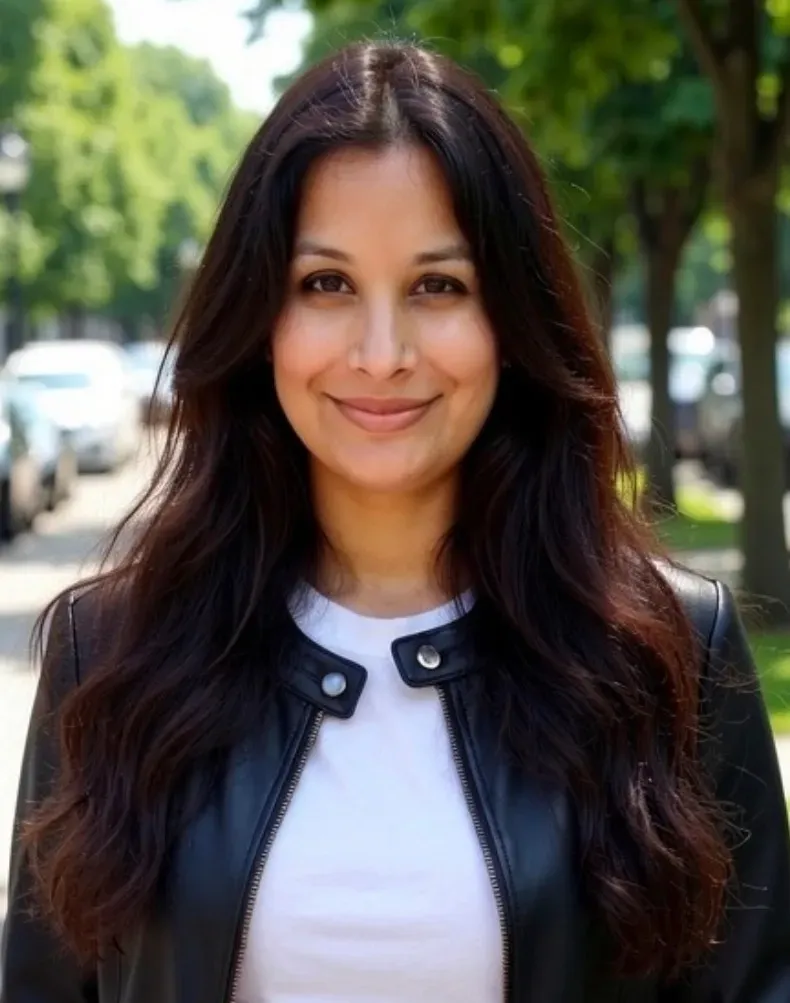
Paromita is a wife, mother to an eight-year-old son, and a high school teacher. Her family and she live in Orange County, California. Paromita graduated from UC Irvine with a Masters of Arts in Teaching. Her son was her inspiration for this book. During her spare time, Paromita enjoys trying different cuisine, visiting local coffee shops with friends, and writing.
What else do you do, other than write?
I am a high school teacher. I teach Biology I also love to spend time with my family, travel, read, try different coffee shops, and I love decorating our home during the holidays
How do you write – lap top, pen, paper, in bed, at a desk?
I love to write down my thoughts in a notebook Something about an old school notebook and physically writing my thoughts helps me gather my thoughts more than typing at first I find inspiration to write outdoors, at home, on a flight, at the beach, and sometimes I new thought or idea comes to mind when I am driving and later I put it in my notes app on my phone
What motivates you to write?
My son, my own life experiences, and my students
Have you always enjoyed writing?
I actually discovered my passion for writing during high school. I had an incredible English teacher who inspired me to look at writing creatively rather than just as an assignment. That encouragement led me to become a junior editor for our ‘Live Poets Society’ club. That early experience was incredibly grounding; it taught me how to appreciate other people’s voices while shaping my own, and I’ve been grateful for that creative spark ever since.
Why do you write?
To be honest, writing is how I heal. It’s a humble, quiet process that helps me untangle and process complex emotions when words fail me out loud. Beyond that, the sheer act of creating something on the page brings me an incredible amount of joy, even on the days when the words don’t come easily
Tell us about your new book? Why did you write it?
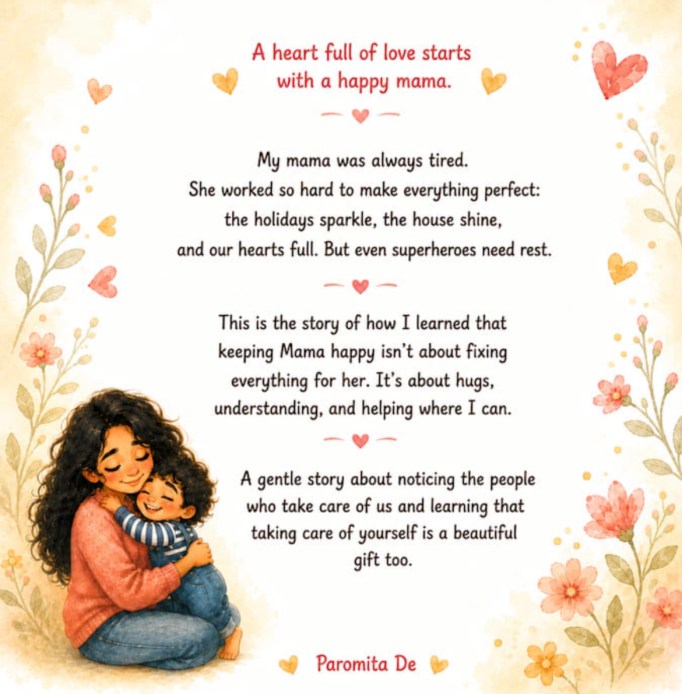
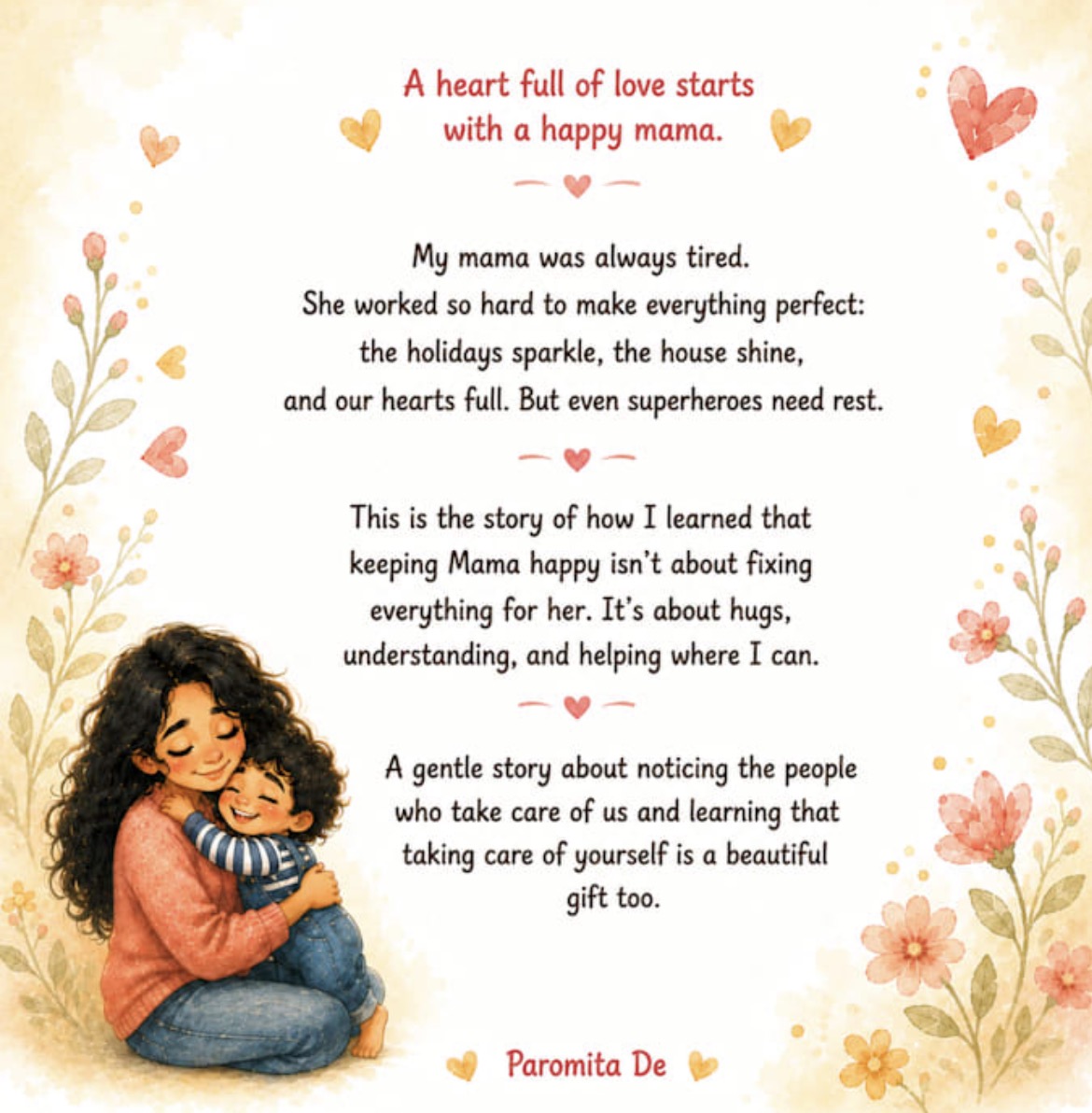
Writing “The Secret to Mama’s Joy: How to Keep Mama Happy” came from a very honest and vulnerable place. My biggest goal was to wrap this heavy topic in a gentle, sweet narrative that a young child can easily understand. Children are so perceptive, and they often think a parent’s sadness or fatigue is their fault. This book is simply a gentle reminder that Mama is human too. It is an invitation for families to connect, practice empathy, and realize that keeping a home happy is a beautiful team effort. I am just deeply thankful if this story can bring even a little bit of comfort, a warm hug, and a moment of shared understanding to a parent and child.
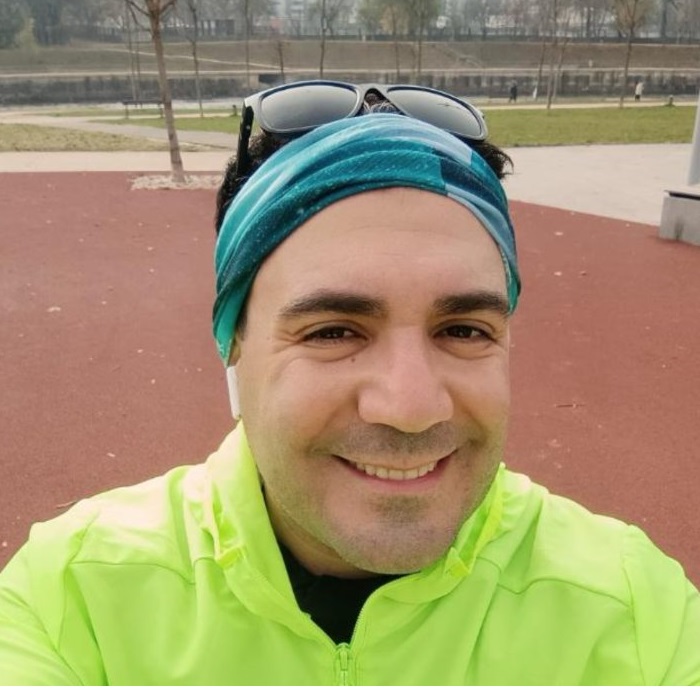
Dr. Zaher Alajlani, Ph.D., is a Syrian fiction author, researcher, and translator based in Cluj-Napoca, Romania, and Athens, Greece. He is the author of five short story collections in English and one in Arabic. His fiction and essays have appeared in numerous international journals and anthologies and received critical attention.
His stories, “Saint Catalina” and “Veorica,” were nominated for the Pushcart Prize.
Zaher also contributed to No More Haunted Dolls, a collaborative volume that critically examines horror tropes in literature, film, and video games. The book was nominated for the Bram Stoker Award for Superior Achievement in Long Non-Fiction.
He holds a BA in English Literature and Language from Damascus University; an MA in English Culture, Literature, and Ideology from the National and Kapodistrian University of Athens; an MA in Communication from the University of Indianapolis; and a Ph.D. in Literature from Babeș-Bolyai University of Cluj-Napoca.
His research interests include morality, religion, meaning, mad science, Jungian archetypes, and early modern horror literature. Zaher speaks English, Arabic, Romanian, and Greek.
Zaher enjoys running and playing video games.
Where are you from?
I was born in Damascus, Syria, and lived there for half of my life. The other half was spent in Athens, Greece, and Cluj-Napoca, Romania.
Why do you write?
Writing is the only way I can make sense of the human condition and the bitter irony of existence. Fiction allows me to explore truth through imagination. Being from a war-torn country and having experienced discrimination, I can only understand my trauma by exploring my characters’ trauma. My primary interest is how our sense of meaning and self-worth can survive the chaos of war, moral failure, national hypocrisy, and eventually death itself—our own and our loved ones’. Thinking of new characters and stories saved my life during some of my darkest days.
What do you write about?
My stories often explore loneliness, estrangement, guilt, anxiety, morality, faith, nihilism, madness, and death. In my realist stories, my characters are usually flawed and in a constant existential crisis. Their tragedy is their mundane existence, and to a degree, I think this is our collective tragedy. For example, the protagonist of “Memory Eternal,” the namesake story of my latest short story collection, Mitsos, is the quintessential unnoticed tragic hero. In my horror stories, I focus on madness, obsession, innate human evil, addiction, and the uncharted territory of psychosis.
Do you have a specific writing style?
As you can see in many of my stories, I try to be as restrained as possible, giving readers enough details to ground them in the reading experience while letting them be active participants in my fiction.
What are the obstacles that come in the way of writing?
I think most writers would say consistency, and I tend to agree. Maintaining a steady writing habit and meeting the daily word count you set for yourself can be very challenging. The most important thing is to keep going whether you’re inspired to write or not.
What’s the most memorable thing asked/said by a reader about your work?
At the book signing event of my previous book, Now She Dreams of War and Other Stories from Transylvania, a Romanian writer and philosopher that I deeply respect asked me, “Since I know you very well, and I know how polite and kind you are, I’m wondering how could you write some violent or dark fiction that leaves the reader feeling unsettled?” She was referring to “Necrosis,” a story from the revised edition of my first book, In Death Veritas and Other Stories. I didn’t know how to answer back then, and I still don’t know. However, that question still haunts me.
How long have you been writing?
I’ve been writing since I was a child. My late father, may his memory be eternal, was a poet and a historian. He encouraged me to write as a child, and I’ve never stopped since. But if you’re asking about my writing career, I’d say 2012 was the year I began publishing and saw enough interest in my writing to encourage me to continue.
What is your work schedule like when you are writing?
I have a child and a wife that I adore to death, and I have a day job. I also run almost daily. So, most of my writing is done whenever I have time, and mostly on my phone. When the work is done, I edit it on my laptop and get it ready for beta reading, copyediting, and publication. When my toddler has his nap is my favorite time to write. I wrote and published most of the short stories of my book Now She Dreams of War when my son was an infant sleeping in my arms.
What would you say is your interesting writing quirk?
I listen to soundtracks from my favorite video games when writing.
How long does it take to write a book? (if you’ve written one -published or non)
I have published six short story collections (only the first one was self-published) and many individual short stories in literary journals in the United States, United Kingdom, Romania, India, the Philippines, Iraq, and Tunisia. My latest collection was published on July 13, 2026, by Celestium Publishing in Oradea, Romania. I have a novella titled The Confession of Vasilis Mavriou that will be published this September by Ramina Books in the UK. I can’t really tell how long it takes to write a book. It depends. Each book is different.
Do you have suggestions on how to become a better writer?
Stay humble and read as much as you can, especially in your genre. And of course, try to keep a consistent writing schedule. You may slip here and there, but making it a habit is very important.
What do you think makes a good story?
Above all, fiction must be entertaining. If a story fails to entertain the reader, then something must be wrong, and the philosophical or moral depth of the story at this point is irrelevant.
What does your family think of your writing?
My family is very supportive. My son, wife, sister, mother, and late father have always stood by my side. My wife and sister are usually my first beta-readers.
Do you see writing as a career?
I never thought of writing as a career, but rather as something I must do regardless of the income. It’s a survival mechanism, akin to a spiritual protest against the material world and harsh existence.
I’m an eighties’ female who was born in Elche, Spain.
During my studying years, I remember being good at English, Maths and Language/Literature. History was one of the subjects I was not attracted to.
In 2008 I moved to the UK.
Through the lockdown of 2020, I challenged myself writing DE TAPEO POR LA HISTORIA, a fiction-history book that took me around a year to complete. In that same year, I published EL PAVO ENAMORADO, a book that compiles all the poems I wrote in my late teens and early twenties.
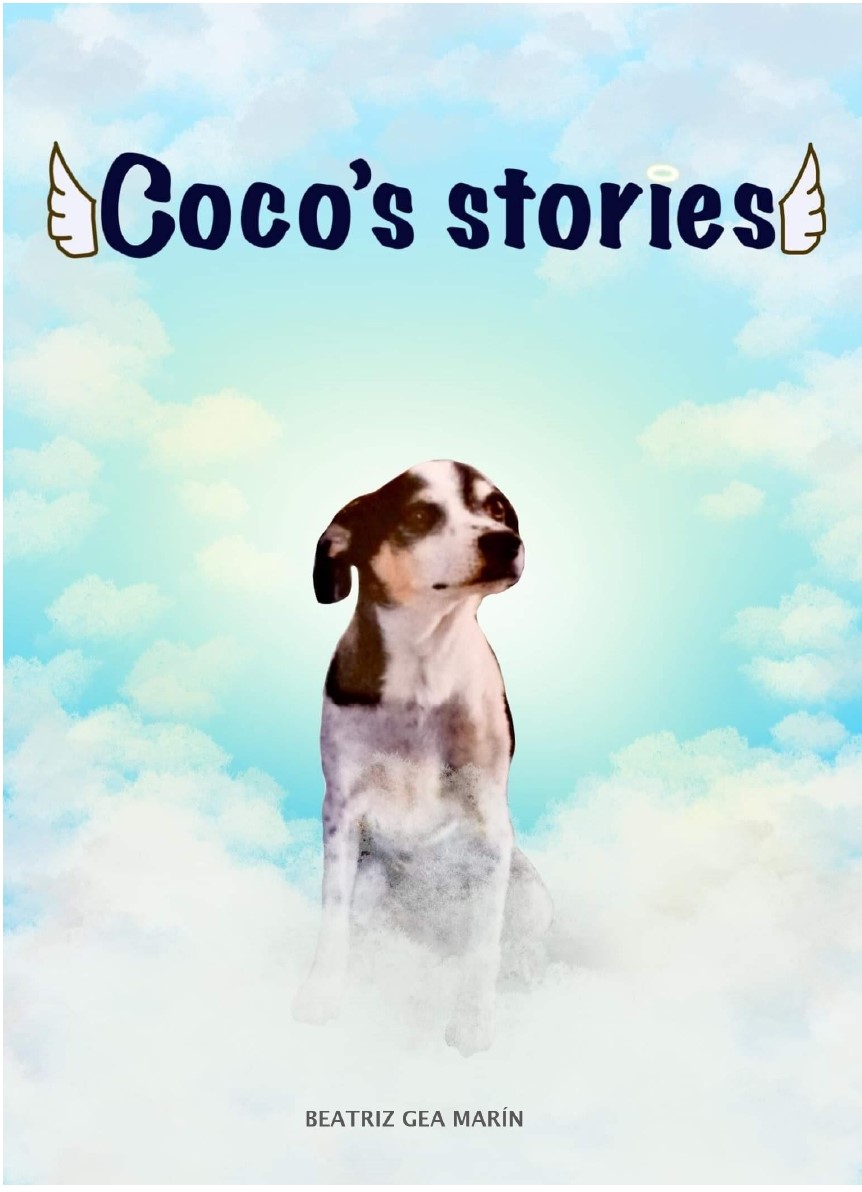
Two years later, after my family’s dog had passed away, and not being able to forget him easily, I decided to write his biography. He tells his own life from Heaven. This is called COCO’S STORIES.
In one of my visits to my family home, I thought: “I don’t think I finish reading that book I bought 20 years ago”. Therefore, I looked for it and brought it with me. After I finished it, a new story came to mind. One that I got very motivated for, thanks to a writing bootcamp. This story is now a series: A DISCOVERY UNDERGROUND & A DISCOVERY UNDERGROUND 2.
As for the last book, I reflected all my weirdest and most interesting experiences as a hairdresser, on an e-book called BEYOND STYLING.
What fact about yourself would really surprise people?
My naturality
How do you work through self-doubts and fear?
I try to relax watching something on Netflix, read a book or share my thoughts with friends.
What scares you the most?
Death and spiders. Spiders terrify me.
What makes you happiest?
I’m happy making people happy and get a smile from them with my chitchats.
Why do you write?
I write because I need to put my thoughts and ideas into a story to be able to get smiles beyond my world’s circle.
Have you always enjoyed writing?
I haven’t enjoyed always writing. This is something that first began when one of my old pub’s colleagues back in 2011 when she advised me to start writing a book because she couldn’t catch up with my love stories. But when I became serious about it, with the thought I wanted to become a known author, was in 2020, and I haven’t stopped writing ever since.
What motivates you to write?
Life itself with its conventional and outrageous ways to present in front of my eyes is what motivates me to add my creativity into it.
What writing are you most proud of?
I would not know which one to choose. As my writing is quite versatile.
What are you most proud of in your personal life?
I think the most proud I feel is by adding one more page each time until the point when I run out of ideas.
What books did you love growing up?
The books I loved when growing up, that I can remember now, were those like The Witches, Konrad, The Little Vampire, Sopaboba or El misterio de la isla de Tokland.
What do you hope your obituary will say about you?
I hope good and humble things.
Location and life experiences can really influence writing, tell us where you grew up and where you now live?
I grew up in Elche (Spain) and I moved to Basingstoke (UK) in 2008.
How did you develop your writing?
I guess I develop it by working on it, revising it later, sending to a friend for proofreading and providing critical points of view so I can check once more before I believe it’s fully completed.
What is hardest – getting published, writing or marketing?
Marketing is the hardest of all because it requires patience, money, time and high expectations put in all those three together to produce any sale.
What marketing works for you?
At the moment I’m marketing my books on Instagram and Facebook most of the time. I believe they are very strong and well-known apps that can help in reaching lots of people.
Do you find it hard to share your work?
I don’t find hard to share my work at all, as I like to have opinions that I can grow with as an author and become better on my next novel.
Is your family supportive? Do your friends support you?
From my family, the only person who is supporting me in sharing my books, by adding them in his WhatsApp story, is my father. In regards to friends, I get a very small number who either likes every single one of my posts, comment about the books that were read or helps me sharing my books on their Instagram stories.
What else do you do, other than write?
Apart from writing books, I write blogs, I read books, I work and I catch up with friends for coffee as often as we both can.
What other jobs have you had in your life?
Since I first had my first job, I’ve worked as a shoe-maker, bakery assistant, hairdresser, travel and medical assistant and more catering in general.
If you could study any subject at university what would you pick?
If I could study a subject at university, maybe I would pick journalism, or interpreting.
If you could live anywhere in the world where would it be?
If I could live anywhere in the world I would choose Japan, I loved it when I went there in 2018 and I’d love to be there and explore more of their culture.
Tell us about your family?
My family consists in two sisters, both younger than me, and my parents. Everyone still going strong and well, which I’m thankful for.
How do you write – lap top, pen, paper, in bed, at a desk?
I prefer to start my writing with pen and paper, as I can go through lots of drafting that way, and then I will transfer it all to my laptop.
How much sleep do you need to be your best?
The sleep I can take to be a person is 8 hours. I don’t tend to sleep more than that, only very rare occasions.
Is there anyone you’d like to acknowledge and thank for their support?
I think the best one to acknowledge right now is my husband, as he is the first person liking all what I post, and gives me the time and space to keep writing.
Every writer has their own idea of what a successful career in writing is, what does success in writing look like to you?
To me success in writing would be just to accomplish this dream and manage to be a retired old woman through this success, so I can read my stories to my descendants and support them in reaching a dream the same way I did or even better.
It is vital to get exposure and target the right readers for your writing, tell us about your marketing campaign?
I’ve never done a campaign before. I’m basically using Canva app nowadays to do pretty posts about my books so I can upload them into Instagram, Facebook and Wechat. I’ve also followed other authors out there and updating my bio with tags that refer to books and authors, so I can reach more viewers.
Tell us about your new book? Why did you write it?
This book, Coco’s stories was written in 2022 and published in March 2023. The idea of writing this book was when I was living at a friend’s house and a housemate told me about her complicated background. At that time, there was also some nostalgia about my family’s dog, as he died when Covid started and also some transition from my father becoming retired. I decided to bring the dog back to life. One of my sisters wasn’t happy in me sharing all of our real lives into the novel. Instead, I captured a mix of personalities between that housemate and my family, so the story can be 90-95% real.
The book provided is a comprehensive exploration of Christian theology, focusing on the transformative power of Jesus’ love and the concept of living a “good life” through faith, hope, and love. The author delves deeply into the essence of salvation, the role of suffering, the importance of forgiveness, and the rejection of legalistic approaches to sanctification.
Book Review: Love Side Up: How Is Believing In Jesus the Secret to Living a Good Life?
“Love Side Up: How Is Believing In Jesus the Secret to Living a Good Life?” is a thought-provoking and deeply spiritual work that challenges traditional notions of Christian sanctification and offers a fresh perspective on living a life rooted in the love of Jesus Christ. The author masterfully weaves personal anecdotes, biblical references, and theological insights to present a compelling case for embracing the transformative power of God’s love.
Key Themes:
The Centrality of Love: The book emphasizes that love, as demonstrated by Jesus on the cross, is the cornerstone of Christian life. It argues that true sanctification comes not from following rules but from living out sacrificial love guided by the Holy Spirit.
Freedom from the Law: The author critiques legalistic approaches to Christianity, advocating for a life free from the condemnation of the law and focused on the grace and love of God.
The Role of Suffering: Suffering is presented not as a punishment but as a tool for spiritual growth, teaching believers to rely on God and embrace His love even in the darkest times.
Forgiveness and Reconciliation: The book highlights the importance of forgiveness—both receiving it from God and extending it to others—as a key to living a good life.
Faith, Hope, and Love: These three virtues are explored as the foundation of a meaningful and abundant life, with love being the greatest and most transformative.
Strengths:
Personal Narratives: The inclusion of real-life stories, such as the author’s experiences with his father and the story of Kraig, adds authenticity and emotional depth to the theological discussions.
Biblical Foundation: The book is rich in scriptural references, providing a solid biblical basis for its arguments.
Accessible Language: Despite tackling complex theological concepts, the author uses clear and relatable language, making the book accessible to a wide audience.
Challenges:
Length and Depth: While the book is thorough, some readers may find the extensive theological discussions overwhelming. A more concise presentation of key points could enhance readability.
Repetition: Certain themes, such as freedom from the law, are revisited multiple times, which may feel redundant to some readers.
Conclusion:
“Love Side Up” is a powerful and inspiring book that invites readers to rethink their approach to Christianity and embrace a life transformed by the love of Jesus. It is ideal for believers seeking a deeper understanding of their faith and a practical guide to living a life of love, grace, and forgiveness. The book’s emphasis on the Spirit-led journey and the rejection of legalism makes it a refreshing and liberating read for those weary of traditional religious constraints.
Rating: ★★★★☆ (4/5) Recommended for: Christians, theologians, and anyone interested in exploring the intersection of faith, love, and personal transformation.
Ernest Randolph has been in ministry since 1986, working with youth and adults, pointing them to Jesus. After graduating with his master’s in Youth Ministry from Denver Seminary in 1994, he worked as a youth pastor, as well as a lay pastor in churches around the Denver area. For the last five years, he has followed a call to lead a Bible study in the local bar, teaching the Word of God to a whole new demographic. This opportunity has forced him to dig deep into the biblical message of salvation and discover how God has provided the perfect means to save everyone: rich, poor, strong, weak, young, old, sinner, or saint. The way of the cross kept screaming out to him as the only way possible to provide for the reconciling all people from all walks of life to God. He wrote this book to remind you of that same message of the cross, which is the life-changing power of God to everyone who believes.
Ernest Randolph has been in ministry since 1986, working with youth and adults, pointing them to Jesus. After graduating with his master’s in Youth Ministry from Denver Seminary in 1994, he worked as a youth pastor, as well as a lay pastor in churches around the Denver area. For the last five years, he has followed a call to lead a Bible study in the local bar, teaching the Word of God to a whole new demographic. This opportunity has forced him to dig deep into the biblical message of salvation and discover how God has provided the perfect means to save everyone: rich, poor, strong, weak, young, old, sinner, or saint. The way of the cross kept screaming out to him as the only way possible to provide for the reconciling all people from all walks of life to God. He wrote this book to remind you of that same message of the cross, which is the life-changing power of God to everyone who believes.
Describe yourself in five words
Very serious and sincere about knowing Jesus and wan4ng others to know him. I work a lot and enjoy it. I try to love others around me in the best way I know how and to the extent that I am able. I always strive to listen and respond better to others. Although I don’t feel that I am good at it, it doesn’t stop me from trying.
What fact about yourself would really surprise people?
I’ve worked with church youth groups for 40 years and I first did electrical work almost 50 years ago with my dad.
How do you work through self-doubts and fear?
I get very sad and fatalist, accepting the consequences and anticipating the outcomes. Still, I trust that Jesus will somehow work things out.
What scares you the most?
People rejecting me and not telling me why.
What makes you happiest?
Teaching people about the love and grace of Jesus.
Why do you write?
I love boiling things down to clear and comprehensive ideas.
Have you always enjoyed writing?
Writing has always been a challenge for me but I have enjoyed the results when I do it.
What motivates you to write?
Sharing my insights with others. I feel like God led me to write this book.
What writing are you most proud of?
This book has been a five year ongoing project. I thoroughly enjoy reading it. It centers my thoughts.
Whatare you most proud of in your personal life?
I have four healthy, successful children who all love Jesus.
What books did you love growing up?
The Bible, Westerns, Simple romance novels
What do you hope your obituary will say about you?
I hope people will know I cared for them.
Location and life experiences can really influence writing, tell us where you grew upand where you now live?
I grew up in small towns in North Central Wyoming and the big city of Billings, Mt. I had a wide variety of experiences and types of friends from farmers, to athletes to drug users, and just regular people. I now live in a bedroom community to Denver and work construction and do volunteer youth ministry.
How did you develop your writing?
I wrote a lot in college and seminary. At about age 38, I had and experience that led me to listening to Aarong Budjen teach me about the gospel and a new perspec4ve on scripture for about 8 years. At about age 45, I started a Bible Study in a bar. Some amazing stuff was coming out of that small study. I began writing it down and processing it all. When I was done I had around a 1000 pages of material. There was too much about too many topics. I narrowed it down to what was most important to me and what I had something significant to say about salvation and sanctification.
What is hardest – getting published, writing or marketing?
I had absolutely no idea what I was doing and thought I needed help. So many things are coming at you so fast that you want someone to hold your hand. I spent significant amounts of money for and tried by fire education in the writing world.
What marketing works for you?
Not sure yet.
Do you find it hard to share your work?
Sometimes it gets discouraging because people are hard eggs to crack.
Is your family suppor1ve?
Only sometimes. They get weary and have their own irons in the fire.
Do your friends support you?
Some do but it’s rare.
What else do you do, other than write?
Electrician and youth volunteer. Remodel my house. Ride mountain trails on a bike.
What other jobs have you had in your life?
Youth pastor, Electrician, Restaurant,
If you could study any subject at university what would you pick?
Want to do a doctorate in Biblical studies.
If you could live anywhere in the world where would it be?
India. Amazing people and culture. Would love to tell them about the freedom found in Jesus.
Tell us about your family?
Wife and 4 kids.
Birth family, Mom, Dad, 8 kids
How do you write – lap top, pen, paper, in bed, at a desk?
I wrote most of my book on my lap top.
How much sleep do you need to be your best?
Eight hours would be nice but 6.5 is my normal.
Is there anyone you’d like to acknowledge and thank for their support?
The teachings of Aaron Budjen are what helped me look at Christianity from a grace perspective.
Every writer has their own idea of what a successful career in writing is, what doessuccess in wri1ng look like to you?
I’m not necessarily seeking a career in writing. I have a message I would like to communicate and writing is the best tool.
It is vital to get exposure and target the right readers for your writing, tell us aboutyour marketing campaign?
I want to get this book in the hands of as many people who are interested.
Tell us about your new book? Why did you write it?
Love Side Up is about knowing the real Jesus, what he has done for us, and what he asks us to do. When we understand and respond to him and his message with a sincere and steadfast effort, we experience the abundant life he has for us. This life is more about his truth and his love than comfort, status, and reward.
If you could have a dinner party and invite anyone dead or alive, who would you ask?
Obviously, Jesus, The Apostle John, and The Apostle Paul. It’s a hard question. There are so many people who know and love Jesus well, but would they take the time to be interested in me?
When you are not wri1ng, how do you like to relax?
Work on my house. Cook. Ride a bike.
What do you hope people will take away from your writing? How will your wordsmake them feel?
I want them to know how wonderful knowing the truth and love of Christ can make their lives.
Ranjit Kulkarni is an author with a penchant for portraying characters from the real world and weaving stories around their apparently mundane lives. He is the creator of Jigneshbhai and Swami.
Born and brought up in Mumbai, Kulkarni spent his childhood in the environs of urban, middle-class India. As an adult, he spent over two decades as a corporate executive in technology and consulting; and his writing is inspired from his experiences from the real urban world of work and life.
With his constant knack for observation and a deep-seated fondness of reflection, he loves crafting sensitive tales that entertain and provoke thought. When not writing, Kulkarni loves reading and going on trips with his wife.
Where are you from?
I am from Bangalore India
Why do you write?
I write to entertain and to provoke thought
What do you write about?
I write short stories and am the creator of the characters Jigneshbhai and Swami. My short stories are about urban characters and the hidden stories behind their apparently mundane lives. My Jigneshbhai and Swami stories and articles are topical, slice-of-life conversations between two friends that pack humor and wisdom
Do you have a specific writing style?
My writing is set in the real world of work and life, and my style is largely contemporary with a tinge of humor, satire and wisdom that leave you with something to think.
What’s the most memorable thing asked/said by a reader about your work?
When a reader told me that he could identify with the characters and relate to the situations faced by them in one of my works, it was a memorable experience.
How long have you been writing?
For five years, since it became one of my primary pre-occupations, and for over fifteen years off and on, part-time.
What is your work schedule like when you are writing?
I write for a couple of hours in the mornings most workdays in a week, have a break around lunch, and then after a nap and coffee, start writing again for an hour or two in the evening
How long does it take to write a book?
I used to try to finish a collection every 4-5 months earlier. I wrote my first four books in less than two years. But now, for the past three years, I have learnt to take my time and try to write one book every year
Do you have suggestions on how to become a better writer?
Practice, practice and practice. You become a writer by writing. Spend your early time writing to discover your style and voice, and then get better at the craft and sharpen it using words
What do you think makes a good story?
A good story must have strong, well-defined characters that the audience can identify with, and at least major conflict – with a person or a situation or anything – that he or she is trying to grapple with.
What does your family think of your writing?
My family is a big supporter of my writing. My wife is my first reader and critic, and my son perhaps my permanent audience. They have been big pillars of strength that a writer inevitably needs in the writing journey.
Doyou see writing as a career?
I see writing as a hobby and a vocation that can become a second career. I spent over two decades as a corporate executive, which was my first career, and helped me make a living for myself and my family. Writing makes that living worth it now in my fifties and beyond.
What books did you love growing up?
I loved reading books by PG Wodehouse, especially the Jeeves and Bertie ones, and I read a lot of Chekhov, Roald Dahl and Indian writers like Ruskin Bond and PL Deshpande
Location and life experiences can really influence writing, tell us where you grew up and where you now live?
I was born and brought up in Mumbai, spending my childhood in urban, middle-class India. As an adult, I spent over two decades as a corporate executive in technology and consulting, due to which I travelled a lot enjoying the cityscapes in America, blend of nature and urbanity in Europe and the sights and sounds of Asian capitals. I now live in Bangalore, which is often called the Silicon Valley of India. My writing is inspired from my experiences in the urban real world of work and life.
What is hardest – getting published, writing or marketing?
Writing and getting published are relatively manageable for me. But I find marketing my work the hardest, partly due to the nature of the vocation, partly due to my introvert nature.
What marketing works for you?
I think engaging with readers who like my voice or style and those who identify with the characters and situations I write about, and providing them with snippets of my writing (from my blog, online or other channels) works for me
What else do you do, other than write?
I am an avid investor in capital markets and am passionate about financial independence. I like to travel to and explore new places as well as trek in the Himalayas. I am a student of spirituality and a reader of scriptures.
What other jobs have you had in your life?
I have worked as a corporate executive in the field of consulting and technology in the field of data analytics in different roles for over two decades. I also take up part-time consulting assignments in data analytics.
Tell us about your family?
My family consists of my wife of 27 years, my adult son and my elderly father. My wife is a doctor, and my son is a finance professional working in consulting. My father, now 84, is a retired government servant.
How do you write – lap top, pen, paper, in bed, at a desk?
I write on my laptop and have a writing desk where I write. I used to write on my mobile when I started many years back but not anymore. I have a diary and a pen that I carry to jot down story ideas but expand on them on my laptop.
Every writer has their own idea of what a successful career in writing is, what does success in writing look like to you?
Success in writing to me is to create a meaningful body of work that I feel satisfied leaving behind – as something timeless that entertains and provokes thought, even if it is for a small audience of readers who resonate with it.
It is vital to get exposure and target the right readers for your writing, tell us about your marketing campaign?
Yes, it is vital – not as much for fame or money – but for the satisfaction of my writing impacting someone, and for the readers to resonate with it. I don’t have any marketing campaigns planned and would love any help on it 😊
If you could have a dinner party and invite anyone dead or alive, who would you ask?
PG Wodehouse with Bertie and Jeeves, Chekhov, Ruskin Bond, Arjuna and Sri Krishna from the Mahabharata!
What do you hope people will take away from your writing? How will your words make them feel?
I hope people get entertained on reading my writing, and identify with the character and situations I write about. I hope my writing provokes thought in them, and brings a smile on their face, makes them laugh at themselves, and sometimes gets a tear.
I share my writing often in the form or articles, stories and updates on my blog at this website. Readers may consider joining my WhatsApp group to get occasional updates on my writing at: https://chat.whatsapp.com/ETNcqMZ1f490vUkp20geLI or scan this code
“We are what we pretend to be, so we must be careful about what we pretend to be…” ― Kurt Vonnegut
Milan Gotcher was born in Washington, D.C., and grew up in Falls Church, Virginia. He graduated from George Mason University with a B.A. in English, with a concentration in Myths and Folklore, and from Louisiana State University of Shreveport with an M.Ed. in reading and literacy.
He then worked as a substitute teacher for two years before moving into administrative roles as a Government Contractor. He is currently employed as a Management Analyst for the Department of Homeland Security, CISA.
Away from his day job, Milan has been an aspiring writer for some time. He has just completed his first novel, which follows the central character, Damian Frost. The young man has always felt like a wayward soul and has been searching for purpose and a sense of belonging.
His first novel, When Fortune Knocks, debuted in late November 2024 and is now available on multiple websites, including Amazon and Barnes & Noble.
Today, Milan lives in Front Royal, Virginia, with his wife, their two dogs, and one cat. In his free time, he enjoys writing, brewing his own beer, coaching high school football, and driving around the beautiful Shenandoah Valley.
Milan fully intends to continue writing more books that people can relate to and already has several other novels in various stages of completion, one of which is a sequel to his first.
You can contact or connect with Milan Gotcher at:
Twitter: @CoachG_GotEm
Email: milangotcher @ gmail.com
Where are you from?
I was born in Washington, DC, raised in Falls Church, VA, and currently live in Front Royal, VA
Why do you write?
Growing up, I loved writing and the arts. However, it wasn’t until college that I began taking writing seriously and joined my university’s newspaper. I stopped writing for a time, then picked it back up and published my first novel last November.
What do you write about?
I love what I call “Small Stories”—narratives about relatable events in people’s lives that often go unnoticed because they don’t impact the world as a whole. I think people have become accustomed to reading stories where the world is at stake or where some supernatural event needs to be stopped. They overlook the average person and how their small accomplishments can be world-changing, even if no one notices.
Do you have a specific writing style?
I would say I do. I use a lot of descriptions regarding the world or areas of my stories, and I feel that my dialogue is realistic and natural flow.
What are obstacles that come in the way of writing?
Time is a big one. I work as a government contractor, and depending on the state of the world, I can be fairly busy. I took a break from writing after graduating from college, and that was mainly to grind for money and earn references for full-time jobs.
What’s the most memorable thing a reader asked/said about your work?
Recently, Jeremy Page, a writer in the UK, wrote to me and said that he really liked the quality of my work. It was encouraging to hear that from someone who was published traditionally.
How long have you been writing?
Like I said, I’ve written on and off for some time now, but I’ve taken it more seriously in the last 5 years. Along with publishing my first novel, I’ve also participated in several short story and flash fiction contests in that time.
When did you first realize you wanted to become a writer?
I really felt like I had a story to tell shortly after deciding not to pursue a teaching role and focus on the government sphere. It was a hard decision, but how I got there was a large basis for my first novel.
What is your work schedule like when you are writing?
I mostly write at night when my wife is asleep on the couch. It’s quiet, and for whatever reason, my mind goes crazy with story ideas.
What would you say is your interesting writing quirk?
I leave subtle humor throughout my writing, even on heavier topics.
How long does it take to write a book?
Well, my first novel took me four years to write (and rewrite), then another few years editing it myself and with the help of editors, and also shopping it around to publishers and literary agents. That being said, I’m more than halfway done with several novels I started in mid-2024, and I will be done with the first drafts by early this summer.
Do you have suggestions on how to become a better writer?
Keep writing. It’s the best advice I’ve ever gotten. Also, enter short story competitions, especially free ones—a good way to tackle specific topics or different genres and flex your writing muscle.
What challenges do you come across when writing/creating your story?
The middle is always a struggle for me. I come up with great concepts for a novel and complete beginnings and ends, but in the middle, I struggle with.
What does your family think of your writing?
They love it. I didn’t tell them about it until I was getting ready to publish my first novel. But since learning about it they’ve been very supportive.
Do you see writing as a career?
Right now, no, it’s a hobby that brings some passive income, but who knows, one day, it might be. If I keep working at it, anything is possible.
Do you have anything specific you’d like to tell the readers?
I just want to thank anyone who orders my novel. I hope they understand that each read and purchase isn’t about money for me; it brings me joy that others enjoy my work. Also, reviews go a long way, so please leave them (haha).
When did you first consider yourself a writer?
When I wrote for my high school newspaper, “The Jagwire”.
Kelsey Carlee is from the Seattle area. She unapologetically writes about her traumas with the intent of helping others by openly sharing her experiences. https://kelseycarlee.com/
Why do you write?
I realized long ago that all I needed was a pencil or pen and paper. I could draw or write down anything that I wanted without anyone criticizing it. It gave me the ability, from anywhere, to escape. I could create my own world on paper and get lost there for as long as I wanted.
What motivates you to write?
I know that writing has and always will create a safe space for me, and it’s always been my muse. I hope to be able to share my work with others because it’s been vital to me throughout my life. Writing has been healing for me, and knowing that I can help others is empowering.
Have you always enjoyed writing?
I’ve enjoyed writing for as long as I can remember and have been writing since I was a kid, with my first published work at fourteen years old.
Location and life experiences can really influence writing; tell us where you grew up.
I grew up in Seattle, Washington.
Do you find it hard to share your work?
Not at all. I love sharing my writing with the hope of helping others.
What are the most memorable things said by readers about your work?
“This is a brave and riveting account of a woman’s journey to heal, and it’s nearly impossible to put down once you start. Double Crossed and Unraveled is a must-read for anyone who has faced emotional trauma and is seeking inspiration to move forward.”
“For the Eternal Record is a poignant and moving epistolary novel that explores themes of love, loss, and redemption. Cole and Kelsey’s heartfelt letters offer a raw and honest glimpse into their lives, grappling with grief, trauma, and the complexities of human connection. This beautifully written novel is a proof to the power of forgiveness and the enduring strength of the human spirit.”
“Kelsey Carlee’s “THE DOUBLE YELLOW LINE” is a raw, powerful collection of poetry. It’s 100 reasons why the author won’t stay quiet about her abuse. Carlee’s bravery shines through as she shares her truths, hoping to help others heal. The book’s strength is its honesty and the message that survivors aren’t alone. If you’re looking for a powerful read about overcoming trauma, this could be it.”
How do you write—on a laptop, with a pen, on paper, in bed, or at a desk?
Although I have scribbled in many journals throughout the years, I currently type my writing on a computer. Having a backspace and the ability to spell check are true game-changers.
Every writer has their own idea of what a successful career in writing is; what does success in writing look like to you?
Success in writing for me has come through the form of my readers reaching out and telling me that having read my books has impacted them, or that they were able to relate to my words.
What do you hope people will take away from your writing?
I sincerely hope that sharing my writing will help someone else who is struggling with grief in their healing from abuse. I encourage everyone with a story of their own to speak it, even if their voice is a whisper. Write it, even if their hands tremble and perspire as they do. There’s something incredibly powerful in knowing that you’re not alone.
I’ve started to write my first book at 16 … but then … realizing i could not publish it … i’ve abandoned the idea of being a … writer. 20 years later … i’ve started to write again … believing i will finally succeed … but i’ve failed one more time … not getting the success i was chasing for. Another 5 years later … i’ve started one more time to write … but this time … more as a therapy. It’s what i’ve defined as … self therapy. I was analyzing and defining lots of weird ideas … that were a lot related to me … and my own soul. I totally forgot that i was chasing for success. I was simple writing my thoughts … in essays … becoming this way … maybe not a writer …. but what many define as … an essayist. This is not a poet … and not a writer. Or maybe is kind of a poet that is incapable of writing poetry … but is still expressing his thoughts … into a similar way … as a poet. And is not a writer … cause have not the ability to write for too long time … about the same subject. But maybe i am not an essayist… either. I am just an ordinary person … that could be better defined … as a thinker. Analyzing … and defining my life … practicing this process called … self therapy … i started to understand life … and the way to better paths which i should follow. And i’ve wrote … and wrote … and wrote … realizing one day that i’ve published tens of books …. not really understanding how the hell I’ve succeeded doing that. Today i dare to recommend writing … as a therapy. I could even say … it’s a simple way of understanding who we are … but also a process that could help us … heal our souls. I personally continue to … write. It’s in fact … a non ending story that … at least for myself … will probably continue for the rest of my life. But over all … i am glad … i am doing it. I continue my philosophical journey … not being able to define myself for clear as a writer or an essayist… but … Well …. most probably… i am on a good path. And … i would dare to recommend to everyone … all what i am doing today.
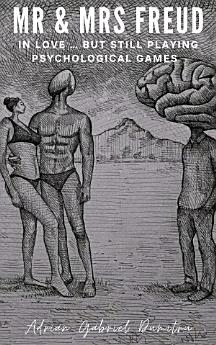
1. What made you decide to write Mr. & Mrs. FREUD? It’s all related to a weird love story, which proved to be more of a psychological game.
2. Tell us a little about your book. It reflects today’s reality, my reality, and that of many others. The internet makes it easy to replace one person with another, leading to psychological games, risks, and attempts to change and adapt partners to our desires.
3. Tell us about the relationship in the book. It’s a reflection of a real story—one story written as many, all disguised. I am a married person involved in a love affair.
4. Why do smart people sometimes act irrationally in love? It’s the expression of the unconscious. We need confirmations, sometimes even daily.
5. How does your own experience with love influence your writing? Everything I write is about me and my experiences, disguised in stories about illusory characters.
6. What do you like to do in your free time? I analyze the world I live in.
7. Do you have any upcoming projects? Yes, I’m working on another seven books, mainly with psychological themes.
8. Describe yourself in five words. Lost, addicted to writing, obviously obsessed with analyzing the world, practicing nonsense, but hopeful for recovery.
9. What fact about yourself would surprise people? I dare to call myself an “idiot,” as I, like many others, am dominated by nonsense.
10. How do you work through self-doubt and fear? I define them through my writings.
11. What scares you the most? That life itself is a never-ending charade.
12. What makes you happiest? The fact that I honestly analyze what’s happening in my life.
13. Why do you write? It’s a self-therapy process. I define my life by analyzing it in micro details.
14. Have you always enjoyed writing? Yes. It helps me a lot, bringing joy and protecting me from losing my mind.
15. What motivates you to write? I want to discover what lies behind the masks of human beings.
16. What writing are you most proud of? My books of love essays.
17. What are you most proud of in your personal life? That I convinced myself writing is a form of evolving, and I practice it regularly.
18. What books did you love growing up? Many books, too numerous to name.
19. What do you hope your obituary will say about you? That a simple person succeeded in analyzing the world we live in—and dared to do it.
20. Where did you grow up and where do you live now? I’m from Romania, near Bucharest. I live in a village—an interesting, never boring place.
21. How did you develop your writing? Time and practice helped me. I’ve written about 67 books and continue writing.
22. What is the hardest: getting published, writing, or marketing? Marketing. It’s more about money and marketing than talent for writers to succeed.
23. What marketing works for you? I invest in advertising, blogs, and social media.
24. Do you find it hard to share your work? It’s easier now than ever before.
25. Is your family supportive? Do your friends support you? They think I’ve lost my mind after reading my work.
26. What else do you do besides writing? I handle money and recently try to convince myself to enjoy life.
27. What other jobs have you had? I’ve been a businessman and a rentier.
28. If you could study any subject at university, what would you pick? The art of telling stories.
29. If you could live anywhere in the world, where would it be? Near the sea or ocean, perhaps on an abandoned island.
30. Tell us about your family. I have a normal life: wife, kids, and a mistress.
31. How do you write? I write from my mobile phone. I’ve written 65 out of 67 books this way.
32. How much sleep do you need to be at your best? 6-7 hours.
33. Is there anyone you’d like to acknowledge and thank for their support? My muses.
34. What does success in writing look like to you? It’s about destiny and the ability to influence the world we live in.
35. How do you market your books? I believe social media is key, connecting with as many people as possible.
36. Tell us about your new book. I’m writing six to seven books in parallel.
37. Why did you write it? To better understand my own life.