January Children’s Books Author Interview Answer #2 “How do you come up with names for characters?”

Children's Books Author Interview
Children’s Books Author Interview

Hello everyone! It’s time to reveal the answers for all 12 questions answered by 12 author participants in the January Group Author Interview, in the 12 genres, 12 authors, 12 months and 12 questions series!

I have to apologize for the delay in posting up the answers for Children’s Book interview series as we previously had two authors pulling out from the interview due to unforeseen circumstances. Nevertheless, we thank them for introducing two other authors for this interview series. But, now we now have not 12, but 14 authors participating in this group author interview.

Yes, I’m breaking the rules for this interview series! While looking for the last author to join us, I had to email a few of them at one go, just to make sure at least one of them gets back to me to complete this interview series. And guess what? I had not one, but THREE authors sending in their submissions at the same time! Can I say no to two of them? Would it be fair? No! So, yes, the more the merrier, I thought. Therefore, let’s welcome 14 authors for this interview series.

The first seven questions are from a ten-year old children’s book reviewer and BookTuber, named Neha Praveen. You can follow her on Twitter at @npstation2018

If you are an author and would like to participate in our upcoming interviews, check out this link, sign up and get your fans to ask their questions to the participating authors! The goal of this author interview is to increase the engagement between readers and authors, and to expose authors to new group of readers.

For more news, book promotion tips and offers, sign up for our newsletter to have the updates delivered right to your inbox.

So, the 2nd question is “How do you come up with names for characters?”

1) Author #1 : Ann Harrison-Barnes

Sometimes I get inspired by books I read, while at other times I may ask other authors for suggestions on ways to come up with names for my characters.

2) Author #2: Samantha Hardin

Sometimes, I use name generators online. Other times, I just think for a little while and come up with some.

3) Author #3: C.J. Rains

Names can be tricky. I’ve sometimes used names of my family members, other times I use names that seem to rhyme with words in the book or just sound interesting. Something that I feel will stick in the head of the reader

4) Author #4: Padma Venkatraman

The protagonist of my debut novel, CLIMBING THE STAIRS, is called Vidya – and I think it’s because subconsciously I knew that Vidya means knowledge, clarity and learning, in sanskrit and it fits because the main character yearns to climb a forbidden staircase to enter a library. I also have 2 cousins called VIdya, one was the daughter of my favorite aunt who always believed in me as a writer and naming a character after her daughter felt like a tribute to her.A Time to Dance also had a main character whose name began with a V – and it’s become a bit of a tradition with me now, because the narrator in THE BRIDGE HOME is Viji! 

5) Author #5: Elizabeth Gerlach

Since the book was inspired by my son Benjamin, the name was simple. His brother Colin and sister Ava also make an appearance in the first book.

6) Author #6: Cassie Miller

It depends, if it is based upon a friend or family member I ask them if they would mind their name being used or if they have a code name they would prefer. If the character is completely fictional I spend a lot of time on Google researching names and their meanings trying to find the perfect fit for what I want the character to embody

7) Author #7: Charlie Bee

That very much depends on the character and how we would like the character to be perceived, for example if we are writing a story for children  and it involves a mean character or villain, we would consider using a name that isn’t flattering, but also a little funny, to make the character less scary for the more timid reader. A good example of this would be Professor Toefluff.

8) Author #8: Jerry Craft

I usually take a long time to come up with the right names. Most times, unless I use one of my friend’s names, if it comes too quickly, I toss it out. I never want to use names that are so common that they appear stereotypical.

9) Author #9: Linda Covella

Often I search “baby name” sites for a name that seems to fit the character. If my story is historical, I’ll look up what names were popular in the character’s time period. Or, I may pick a name because of its meaning. For instance, “Fernanda,” the main character in Yakimali’s Gift, means “adventurous one,” which Fernanda is and longs for adventure in her life.

10) Author #10: Tracy K

From other stories I have read

11) Author #11: Beffy Parkin

Naming the characters is lots of fun. They can be bizarre and wonderful names, or names that everyone knows, as long as it suits that character. 

12) Author #12: Lory Linn

I guess that depends on the personality and age of the character. If I’m using the character’s name in the title then I like it to be something catchy, something people will remember, especially if it’s a children’s book.

13) Author #13: Karen Magnen

The names are sometimes people or animals in my life, otherwise I just pick names out of the blue. Common names that a child reading the story may have.

14) Author #14: Dr. Graham Clingbine

I use first names of friends from school days or sometimes family members (but only if they ‘’feel’’ right for the story I am writing). If not I will just use names I like.

Stay tuned for the next post. Be sure to follow this website via email to get notified when new posts are being made.

Best regards,

Jasveena

Founder of International Book Promotion

An Interview with Author Khanh Ha

Khanh Ha

Khanh Ha is the author of Flesh (Black Heron Press) and The Demon Who Peddled Longing (Underground Voices). He is a seven-time Pushcart nominee, a Best Indie Lit New England nominee, a twice finalist of THE WILLIAM FAULKNER-WISDOM CREATIVE WRITING AWARD, the recipient of Sand Hills Prize for Best Fiction, and Greensboro Review’s ROBERT WATSON LITERARY PRIZE IN FICTION. The Demon Who Peddled Longing was honored by Shelf Unbound as a Notable Indie Book. Ha graduated from Ohio University with a bachelor’s degree in journalism.

Describe yourself in five words:

Meticulous. Stubborn. Determined. Moody. Faithful.

How do you work through self-doubts and fear?

Sometimes there’s fear but never self-doubts as a writer. It takes time, patience and a whole lot of self-depreciation, but never self-doubt. There’s fear for physical disasters, but never irrational fear. I can’t help remembering the words from Jiddu Krishnamurti: “If you are totally free of fear, then Heaven is with you.”

What makes you happiest?

The harmony that comes from my family. You long to go home where you have love. Having both, you’re blessed. And love is the oil that erases friction. I believe that was said by Friedrich Nietzsche.

Why do you write?

There was this dinky book-for-rent store in Hue, Vietnam, that my older brother and I used to haunt. I was nine. We would pool our money we got from Grandma and rent all the books we could read, most of them Chinese classics. My favorites then were The Tale of the Three Kingdoms and Journey to the West. One day we ran out of books to rent.

Bookish addiction! I started making up stories in a chapbook. Did I want to become a writer someday? No. But something was sowed in my fertile mind during that time. It must have started with The Count of Monte Cristo. Fifty some volumes of it in Vietnamese translation, pocket-sized, were sent to us in serial each week from my mother who was then living in Saigon. I would devour each volume and grow hungry for more. Outlandish worlds. They would ebb and flow in my mind, leaving the fecund silt on its bottom, and one day in my teenage years I wanted to become a writer.

What writing are you most proud of?

All of the books I have published: “Flesh,” “The Demon Who Peddled Longing,” “Mrs. Rossi’s Dream.”

Location and life experiences can really influence writing. Tell us where you grew up and where you now live?

I grew up in Hue, Vietnam, where my childhood was imbued with the cultural intellect of a city known for its moss-stained citadel, the imperial tombs nestled in the pine forest, temples and pagodas tucked away at the foot of gentle hills by a quiet stream. Its damp, foggy climate had left moisture damage on the ancient buildings, on old houses with moss-covered yin-yang roof tiles. As a child, I lived in its mysterious atmosphere, half real, half magic. I used to walk home under the shade of the Indian almond trees, the poon trees. At the base of these old trees I would pass a shrine. If I went with my grandmother, she would push my head down. “Don’t stare at it,” grandmother said. “That’s disrespect to the genies.” Like many other children, I had an indelible belief in animism. An unseen presence dwelling in an odd-looking rock by the roadside where people placed a bowl of rice grains and a stick of incense long gone cold. Those anthropomorphic images sown in a child’s mind later became inspirations for my writing. Then I moved to the United States for my college education, and this has become my second homeland ever since. I learn to blend my eastern culture with the western culture. My journalism background taught me to write lean prose; but I’m a novelist, not a journalist. A journalist targets an audience; a novelist builds a make-believe world. It may be a paper moon sailing over a cardboard sea; but if it’s believable, readers will come.

What is hardest – getting published, writing or marketing?

Hardest is getting your work published. And I dread having to whore myself for that. Writing isn’t a lucrative business, unless writing ransom notes—someone said that. Then you’ll come to appreciate what Hemingway once said: “Most live writers do not exist. Their fame is created by critics who always need a genius of the season, someone they understand completely and feel safe in praising, but when these fabricated geniuses are dead they will not exist.” That’s the major frustration for a published writer. But that frustration is negated by the sense of self-fulfillment when you hold a copy of your book in your hands. Your book is the link that connects you with the world.

Is there anyone you’d like to acknowledge and thank for their support?

My deepest gratitude goes to my co-pubishersMartin and Judith Shepard and my wife whose love and devotion has sustained me over the years.

Tell us about your new book? Why did you write it?

My next novel is set in Dien Bien Phu where the French army surrendered in 1954. It’s a love story. Think of Love in the Time of Cholera by Gabriel García Márquez, because the novel spans three decades from 1954, beginning in the valley of Dien Bien Phu, that small valley in the fog and rain of the northwestern forest, a place and time that captivates me all my life, where love blossoms and dies and blossoms again after the lovers have lost each other, aged with the years. There were things left out from “Mrs. Rossi’s Dream,” which later morphed into this new novel. “Father once said in his diary that a man’s karma could be passed on to his children,” said a 16-year-old mute girl whose inheritance from her estranged father is his lifetime artwork. Thus begins the historical tale by the young girl. Amid the horrific stories on the rice road, the cannon road, and in the trenches is a love story between her father—an artist-reporter at frontline—and a singer-performer who traveled with an entertainment ensemble to the frontline. Their poignant story ended when they became separated after the victory of Dien Bien Phu and her father was then sent to South Vietnam to fight the American Vietnam war. From his diary, his sketchbook, his lifetime artwork, and the work he contributed to the Must Win newspaper at frontline, Hai Yen recreates a love story so innocent and vulnerable within an epic Stalingrad of the East through her own sensitive narrative.

When you are not writing, how do you like to relax? 

I read a lot between the long breaks from writing novels. We’d vacation, as a family, sometimes to the seaside, sometimes out of the country.

What do you hope people will take away from your writing? How will your words make them feel?

I never intend to send readers any message in any novel I write. I don’t believe in it. But I like novels that give me food for thought. I like novels that offer a redemptive value. I hope Mrs. Rossi’s Dream does. A good book will haunt you. I read The Sound and the Fury by Faulkner and found myself envying him. I believe that writers have influence on one another. Influence, not inspiration. Maybe someday what I wrote might bear some influence on some aspiring writers. If you are a reader, what you read at the early age―if you always trust your childhood memory―will become the undertone of what you want to read as an adult. 

What’s the most memorable thing asked/said by a reader about your work?
It came from a critic who reviewed Flesh, my debut novel. She said: “The book opens with two epigraphs, one from Charles Farrère: ‘Yes, I am no longer a man, no longer a man at all.  But I have not yet become anything else.’ The second from Mr. Arthur Rimbaud, which in light of the outcome of Mr. Khanh’s exquisite book is the perfect introduction, and one to which you will return when you have finished the last page of the book: ‘When the world is reduced to a single dark wood for our four eyes’ astonishment—a beach for two faithful children, a musical house for one pure sympathy—I shall find you.’

“It is my honor to have been able to review this book by Mr. Khanh Ha, the first book of his that I hope is one of many to come. I cannot encourage you enough to read it, and savor all the morsels, and gather every scent that rise up from every page.”

What is your work schedule like when you are writing?

A routine helps settle my mind before I write. My routine of a typical day is to eat a light breakfast and be at my desk between 7:30 – 8 a.m. I drink black coffee throughout the morning while I’m at work―no snacks. I listen to classical or relaxation music while I write. It helps soothe my mind unless I do need an absolute moment of quiet to capture my thoughts. In that case, I write in the quiet. I read during my writing breaks. Have lunch, read a newspaper, then be back at work until 4 p.m.  That’s the capsule of a day in a life of a writer. And it starts over again the next day. If a novel takes a year or longer to write, the routine of each day is duplicated over again like clockwork.

What challenges do you come across when writing/creating your story?
Family crisis. You feel wrecked—as a husband, a father. The writer in you is annihilated because of that. But what annoys you the most while you’re writing a novel comes from interruption and sickness. In that order.

Do you have anything specific you’d like to tell the readers?

If you’re an aspired writer, consider how your day-to-day life influences your writing. In fact, it’s reciprocal. Live right and you write better. Write well and you live better.

Follow author Khanh Ha via the following social media:

Website: http://www.authorkhanhha.com
Twitter: https://twitter.com/authorkhanhha
Facebook: http://www.facebook.com/authorkhanhha
Pinterest: www.pinterest.com/khanhha

Blog: http://authorkhanhha.blogspot.com/

January Children’s Books Author Interview Answer #1 “What is your source of ideas for a new book?”

Children's Books Author Interview
Children’s Books Author Interview

Hello everyone! It’s time to reveal the answers for all 12 questions answered by 12 author participants in the January Group Author Interview, in the 12 genres, 12 authors, 12 months and 12 questions series!

I have to apologize for the delay in posting up the answers for Children’s Book interview series as we previously had two authors pulling out from the interview due to unforeseen circumstances. Nevertheless, we thank them for introducing two other authors for this interview series. But, now we now have not 12, but 14 authors participating in this group author interview.

Yes, I’m breaking the rules for this interview series! While looking for the last author to join us, I had to email a few of them at one go, just to make sure at least one of them gets back to me to complete this interview series. And guess what? I had not one, but THREE authors sending in their submissions at the same time! Can I say no to two of them? Would it be fair? No! So, yes, the more the merrier, I thought. Therefore, let’s welcome 14 authors for this interview series.

The first seven questions are from a ten-year old children’s book reviewer and BookTuber, named Neha Praveen. You can follow her on Twitter at @npstation2018

If you are an author and would like to participate in our upcoming interviews, check out this link, sign up and get your fans to ask their questions to the participating authors! The goal of this author interview is to increase the engagement between readers and authors, and to expose authors to new group of readers.

For more news, book promotion tips and offers, sign up for our newsletter to have the updates delivered right to your inbox.

So, the 1st question is “What is your source of ideas for a new book?”

1) Author #1 : Ann Harrison-Barnes

That depends on the book. As I’ve heard authors say from time to time, ideas come from everywhere. However, Inspiration can come from a variety of sources too. Maggie’s Gravy Train Adventure was inspired by a tweet about a gravy train.

2) Author #2: Samantha Hardin

They honestly kind of just pop up in my brain. They don’t seem to come from anywhere specific.

3) Author #3: C.J. Rains

My ideas can come from almost anything. Sometimes an idea will pop in my head right out of nowhere, while other times they can come from something I see, something I’ve read, or just from a personal experience.

4) Author #4: Padma Venkatraman

Until now,  all my books are in part based on a true story. The main characters are also inspired in some way by someone real. For example, Vidya in Climbing the Stairs is inspired by my mother and my family history (in India in the 1940’s); A Time to Dance is inspired by Shoba Sharma and other dancers I saw; and all four main characters in The Bridge Home are inspired by friends I had as a child. 

5) Author #5: Elizabeth Gerlach

My book Ben’s Adventures is actually inspired by my son Benjamin. He lived with cerebral palsy and various medical challenges so I wanted to show that even though a child might have physical differences, he/she can still be a kid, daydream, pretend, play, have friendship and be happy. So far, my ideas have been based on our family experiences, vacations at the beach, trips to the circus (new manuscript), etc.

6) Author #6: Cassie Miller

I get my ideas from my life and the lives of my loved ones. Everyone is so unique and interested in such a wide range of things I have a never ending and always evolving pool of ideas to pick from

7) Author #7: Charlie Bee

Anything may spark an idea, for example imagery and sounds, music, conversations, literally anything.

8) Author #8: Jerry Craft

When I was writing New Kid, my middle grade graphic novel, I used a lot of my memories as a kid starting a new school. I had always attended small schools that had classes of 25 students, of which most were African American. But the high school I attended had me as one of maybe 10 African American students out of a class of over 100. Plus, like me, Jordan Banks is one of the youngest and smallest kids in his class.

9) Author #9: Linda Covella

My inspiration for my books comes from many places: personal experiences, places I’ve been, books and other publications I’ve read. For instance, reading about the 1775 colonization expedition from Mexico to California inspired my novel Yakimali’s Gift and picture book The Power of a Dream: Maria Feliciana Arballo, Latina Pioneer.

I’ve always liked ghost stories, so that partially inspired my Ghost Whisperer series, which also take place in Santa Cruz where I live. Book one, The Castle Blues Quake, involves an earthquake, of which I’ve experienced numerous times living in California. Part of the plot for book two, The Ghosts of Pebble Brook Lodge, was inspired by a true story of a girl drowning in a creek that runs through the dining room of the local Brookdale Lodge.

And with Cryptogram Chaos, I was tired of seeing computer games with all the fighting and killing, so my fourteen-year-old characters create a game where gamers advance to different levels by answering secret codes, or cryptograms. Each of the three levels has increasingly exciting things for the gamers to do, such as eat all the candy and ice cream they want, undersea adventures, racing cars, bungee jumping, and becoming powerful avatars.

10) Author #10: Tracy K

From my own life experiences.

11) Author #11: Beffy Parkin

Ideas can come from anywhere, whilst doing the most boring activities in the world! It could be from a mispronounced word that sounds like a fun character’s name.

12) Author #12: Lory Linn

I simply use the sources I have in front of me; nature such as watching birds play in the water, people at the beach or the mall, watching my dog play, and most recently I am writing a book based on my granddaughter.

13) Author #13: Karen Magnen

I have so many ideas for stories.  I write from experience, Milton was a real dog.   I also write about topics that interest me, such as fairies and dragons. I write stories that are funny, and teach some simple lessons.

14) Author #14: Dr. Graham Clingbine

I think about real-life fun or funny experiences that happened in my childhood that have remained in my memory as an adult.

Stay tuned for the next post. Be sure to follow this website via email to get notified when new posts are being made.

Best regards,

Jasveena

Founder of International Book Promotion
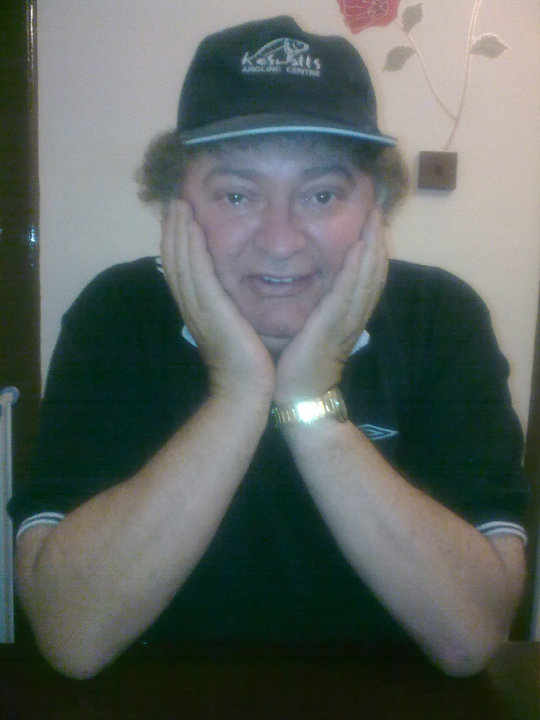
January Children’s Book Author Interview: Author #14 Dr Graham Clingbine

Dr. Graham

Dr Graham Clingbine was born in Hammersmith (London) but grew up and spent his childhood in Harrow and lived in Plaistow and Ilford (UK). Graham has BSc and MSc degrees from the University of London (Bedford College, Regents Park) in the areas of Biological Science and Neurobiology. His award of PhD followed a research programme on the memory mechanisms of the brain. Graham spent a long career in education at schools and collegs before retiring from City & Islington College in North London from his post as Senior Lecturer in Human Anatomy & Physiology and Biochemistry. In addition to his teaching activities, Graham spent many years as a home-based network marketer. Graham is a multi-genre author with books on science fiction, UFOs, network marketing, human sexuality and children’s stories. His hobbies include fishing, international travel and administering an online book and authors group.

January Children’s Book Author Interview: Author #13 Karen Magnan

Book by Karen

Hi there, my name is Karen Magnan and I am a new author. As of right now my focus has been on writing children’s books, and books for young adults.  My story is interesting in that I did not write my first story until I was in my mid 50’s, and I quickly became a writing machine. I have now sent 7 books to my publisher just since December 2018.

I moved to Florida and went from working 14 hour days to just part time, and I suddenly had a lot of free time I did not know what to do with.  One day I was bored and thought, I think I will  finally write that children’s book I wanted to write. Two hours later, my first story was written, “The Dragon Who Got the Fairy Godmother to Like Vegetables.”

The next week I wrote a second book about Rosie the Pink Dragon and then a third the week after that. Each story took about two hours to write and then some editing, and it was done.  I am now writing another series about Milton, who is a lovable, big German Shepherd/Hound dog.  In the first book he helps his owner, a boy named Charlie, get confidence and make friends when Charlie sneaks Milton into school for Show and Tell.  The story is called, “Show and Tell Day for Milton.”

These two books are going to be published by Bob Scott Publishing early this spring.  I have an illustrator working on each book, and they are doing fabulous work, and they are both almost done with the pictures.  Once they are done, Bob Scott will get to work on printing them and releasing them, and that should only take about a month or so.  It is all so very exciting getting to see my stories come to life with the illustrations. I truly feel blessed.

January Children’s Book Author Interview: Author #12 Lory Linn


Lory

Lory Linn is an author living along the coast of South Carolina. She has considered herself a writer since she was old enough to hold a pencil. As a child, she was always creating something new and as an adult, she studied the craft. She started as a freelance writer eventually becoming a published author. She created her Adventures of Little Kora Jane series based on her own granddaughter and her stuffed cat Meow. She considers herself a multi-genre author but her favorite is creating children’s stories. See a pic and more info here: https://lwrites4you.wixsite.com/lorylinn
and here: https://littlekorrajane.com/

January Children’s Book Author Interview: Author #11 Beffy Parkin

Beffy Parkin

Indie author of the Charlie Cheese Books series, and the upcoming The Macroodelzig. Beffy has been writing since 2015, whilst working in a preschool, she made up wacky and funny stories with the children, and decided to have them published! She writes many things, but mostly children’s books. 

Link to Amazon page

January Children’s Book Author Interview: Author #10 Tracy K

Tracy K

Tracy Kauffman is a young adult and children’s book author from Alabama. She writes stories stories to inspire and edify her young readers. Her first book: Southern Adventures was published by Tate Publishing. It was a story of her childhood. Her newest story Captain Honeybear is about a young bear who serves as the forest superhero rescueing damsels in distress. 

Other Works include: Southern Attraction, Gwendolyn’s Wish, My Boyfriend the Squire.

Facebook link: https://www.facebook.com/TracyKauffmanFictionAuthor/

January Children’s Book Author Interview: Author #9 Linda Covella

https://lindacovella.files.wordpress.com/2012/08/linda-covella-photo.jpg?w=298&h=300

Linda Covella

Linda Covella’s varied background and education have led her down many paths, but one thing she never strayed from is her love of writing.

In writing for kids and teens, she hopes to bring to them the feelings books gave her when she was a child: the worlds they opened, the things they taught, the feelings they expressed.

Linda has been a member of the Society for Children’s Book Writers and Illustrators (SCBWI) since 2002.

She lives in Santa Cruz, CA with her husband, Charlie, and dog, Ginger

Linda’s page at
https://lindacovella.com/

January Children’s Book Author Interview: Author #8 JERRY CRAFT

Jerry Craft
Jerry

JERRY CRAFT is an author and illustrator who has worked on numerous picture books, graphic novels, and middle grade novels. His newest book, New Kid, is a middle grade graphic novel that has earned four starred reviews, including one from Booklist Magazine that called it “Possibly one of the most important graphic novels of the year.” Kirkus Reviews called it “An engrossing, humorous, and vitally important graphic novel that should be required reading in every middle school in America.”

Visithttp://jerrycraft.com/