As an avid reader, I’ve spent my fair share of time poring over book reviews on Goodreads. And yet, in all the hours I spent with my head buried in a book, fantasizing about the idealistic world of Enid Blyton, the thrill of a fast-paced Agatha Christie, or the magnanimity of Jane Austen’s Georgian society, never did I imagine myself having an author page of my own.
But as they say, what’s meant to be, will be. Life, in a disarming way, will sometime prod you and nudge you until you are on the path to your inner calling. And so, here I am.
It brings tears to my eyes to announce that my first ebook “From Stressed to Sorted’ is now available for purchase on Amazon. That this is a huge milestone for me goes without saying. It is dedicated to my Ma, who was very much involved in…
If you are self-published or if you are poorly represented by your publisher, you should definitely be concerned on how your book and YOURSELF are being marketed in the industry, no matter if you are introverted or if you hate sales.
Read on to learn how we, as authors, can overcome these challenges.
by Lauren Sapala By and large, the biggest problem I run into with struggling authors is the challenge they have around marketing themselves. I hear a lot of different reasons for this: “I’m too introverted.” “I hate anything that has to do with sales.” “I don’t want to be fake or phony,” etc. […]
CLASSIC KRAKAUER: Essays on Wilderness and Risk, by Jon Krakauer. (Anchor, paper, $15.) The best-selling author of books like “Into the Wild” and “Missoula” started as a magazine journalist; this collection spans three decades, on subjects from surfing to mountaineering.
A list of book festivals happening in 2020 Photo by Ivo Rainha on Pexels.com
I personally feel that, as an author, it is crucial to attend book festivals to connect with the like-minded communities. It is where you can meet readers, writers, publishers and literary agents who may represent your work one day.
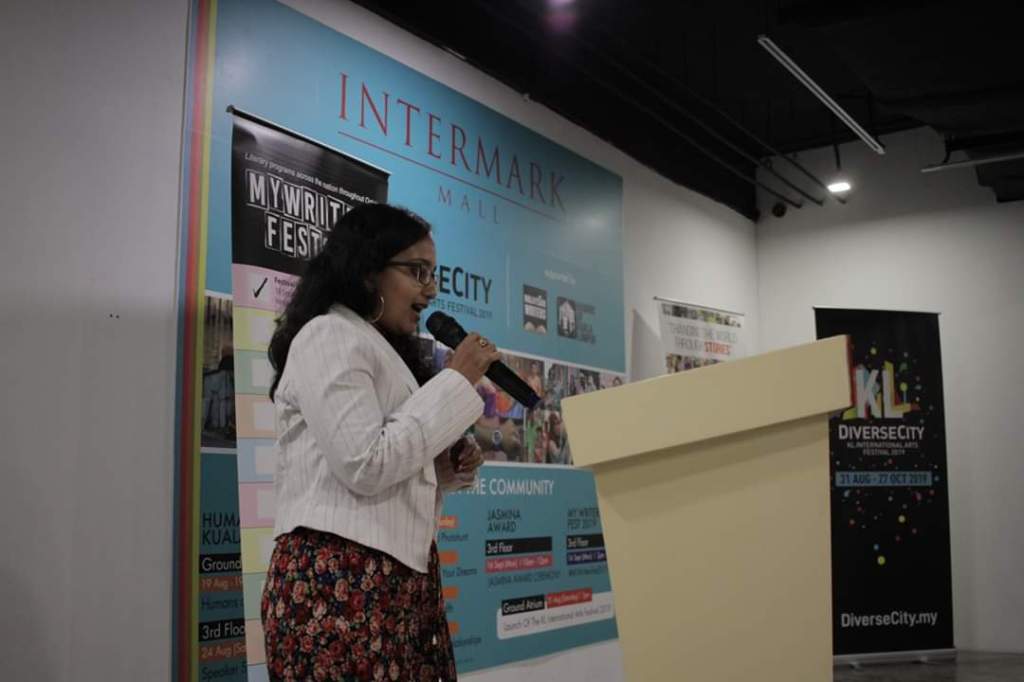
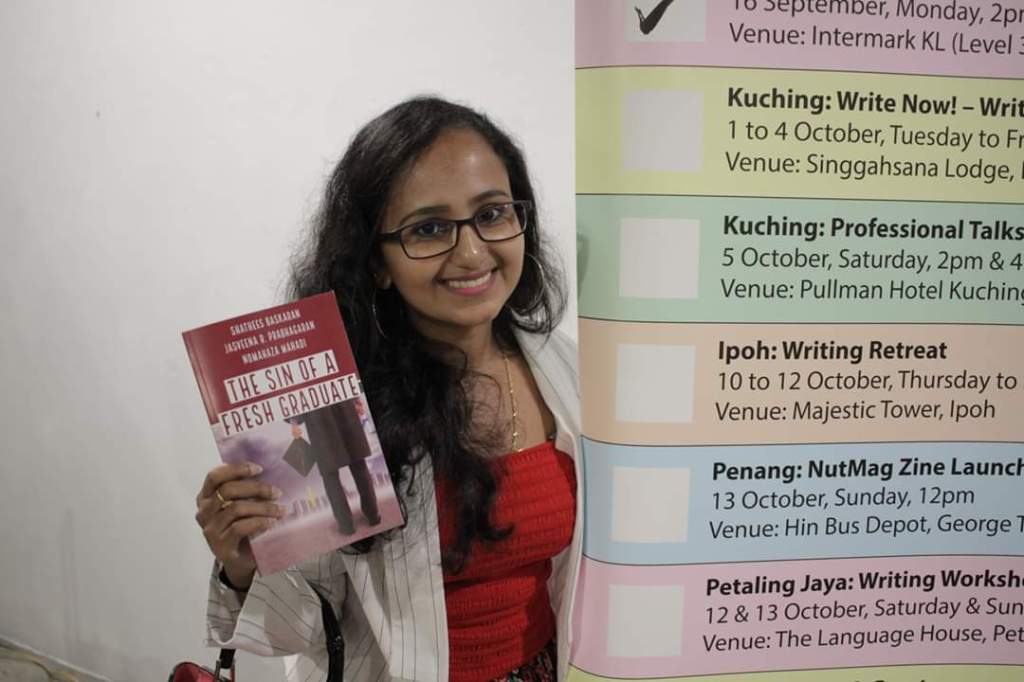
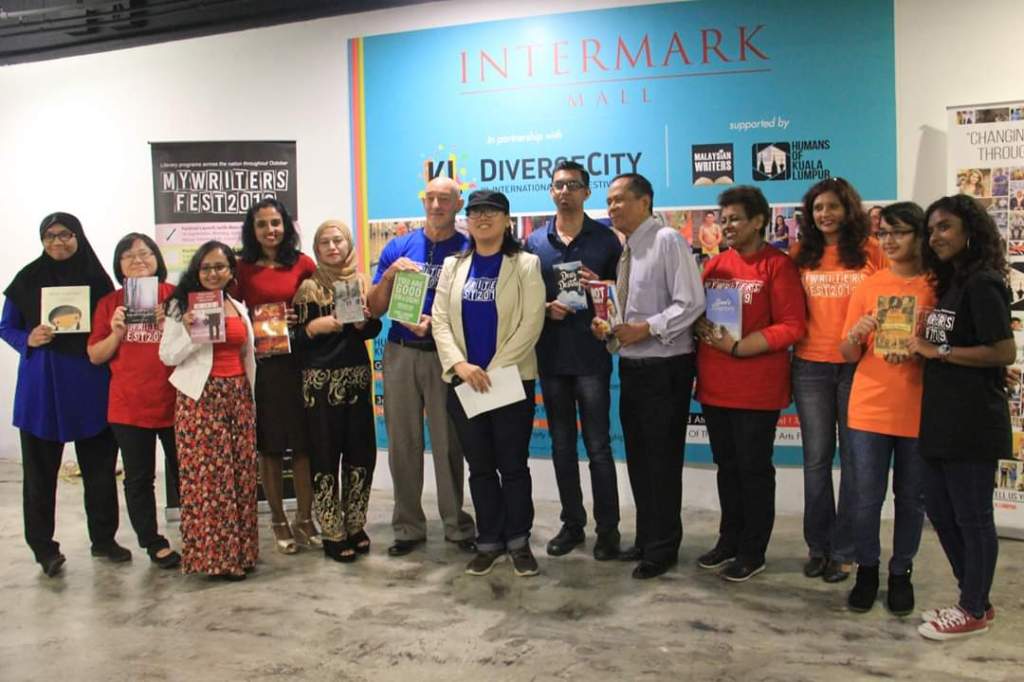
Attending author events can be costly and that is the reason why I chose to attend three of the many interesting writing-related workshops and book launch that took place October this year. I wish I could attend all of them and meet as many interesting people from the events but time and cost are the two factors that would often prompt us to prioritize our choice, which I think is good as we are forced to think efficiently.
Here is a little warning about a “service” I subscribed to recently: Wid Bastian of Genius Media who now has a new business named Kairos Phoenix Company (KPC).
I’m usually sceptical when it comes to professional indie author support but was taken in by his string of box sets. So many authors couldn’t be wrong?
Our book, Do No Harm, A collection of Medical thrillers, did well. Thanks to advertising and our own huge efforts we made USA Today and gathered 1.5 millions page reads during the short time it was in KU.
Two charities were named for this set, both 501c3 charities in the US and were to receive the pre-order proceeds. The charities advertised and marketed the set along with the authors.I’ve seen predominantly the marketing efforts from charities and the authors involved – actually next to nothing from his company.
E-book theft and measures to prevent it from happening Photo by Perfecto Capucine on Pexels.com
I am in the midst of finding out how to encrypt work shared digitally, especially for the purpose of getting beta readers to critique our work and to get #bookreviewers and #booktubers review our books. Author Review Copy (ARC) is what we call the books sent to readers in exchange for a review, but when it is sent in PDF form, it is just a matter of time before the whole book gets copied and sold elsewhere.
A simple google search moments ago helped me discover this website which I believe has a lot more other useful tips for authors and I would highly encourage you to read it. Also let me know in the comment below if you have actually used any softwares that help you safely sell encrypted e-books or if any of these precaution measures helped you in the past?
Jerald grew up in beautiful San Diego, CA and as it’s a tourist destination, he decided to attend San Diego State University where he earned his Bachelors of Science in Civil Engineering and a minor in Religious Studies. He not only enjoys constructing bridges and structures, but ourselves internally and externally as well. The search for his dreams, the grit and wit of his life contributed to his resilient curiosity about change, the human mind, and our life path. He has studied hundreds of interviews, debates, documentaries, anime, and read countless articles, blogs, books, and anything relevant in which would equip him with invaluable knowledge pertaining to life. His zodiac sign is a cusp of a Cancer and a Leo and he is of house Gryffindor and Stark for all you Harry Potter and Game of Thrones lovers out there.
Stuff He Loves: Basketball, Connect Four, Eating, Music, Ping Pong, Relaxing, Sleeping, Working Out and Working Hard.
Instagram: Jalbritton52 Email: Jalbook52 at gmail dot com
What fact about yourself would really surprise people?
I have a Civil Engineering degree and a minor in Religious Studies
How do you work through self-doubts and fear?
By believing in myself and that whatever occurs in my life I am strong enough to endure.
What scares you the most?
Losing myself to power and corruption
What makes you happiest?
Inspiring, motivating and helping others.
Have you always enjoyed writing?
No, I actually despised writing boring essays in high school and college.
What writing are you most proud of?
My new book, The Obscured Journey Rise from the Fog of Uncertainty
Get the book on Amazon
What are you most proud of in your personal life?
Persevering through my hardships
What do you hope your obituary will say about you?
That I was a kind joyous uplifting individual and that I impacted the lives of many.
Location and life experiences can really influence writing, tell us where you grew up and where you now live?
I grew up in San Diego, CA but I currently reside in San Francisco, CA
What is hardest – getting published, writing or marketing?
Marketing as its easy to publish but difficult to get your book noticed.
Do you find it hard to share your work?
No, I give my book out for free all the time. If your scared too give out your book then you will suffer from anxiety. Have faith that some will love your work and that less will not like it.
Is your family supportive? Do your friends support you?
Very supportive. I am lucky to have them in my circle.
What else do you do, other than write?
Basketball, Ping Pong, Relax, Eat, Gym, watch documentaries, tv shows, movies, party. I’m a simply guy and I do what makes my heart content whether that be out adventuring or chilling doing absolutely nothing.
What other jobs have you had in your life?
Bridge Engineer and Civil Engineer
If you could study any subject at university what would you pick?
Psychology or Philosophy
If you could live anywhere in the world where would it be?
San Diego as there is no place like home.
How much sleep do you need to be your best?
6 hours
Every writer has their own idea of what a successful career in writing is, what does success in writing look like to you?
Well success to me is just getting my book recognized. I don’t have to sell a million copies but if it gets some recognition and changes people lives then that would be a successful writing career for me. No reason to have 50 books if only 2 of them are actually helping others.
It is vital to get exposure and target the right readers for your writing, tell us about your marketing campaign?
Very vital as there are so many books nowadays and without the right marketing schedule, your book may only be seen by friends and family
Tell us about your new book? Why did you write it?
My new book is about your path in life, that next chapter and being able to comprehend who you are as an individual. I wrote it because millennials like me are walking around so confused and loss. Even the older generation is confused as they don’t know what’s after retirement or if this is what the rest of my life may look like.
If you could have a dinner party and invite anyone dead or alive, who would you ask?
Tupac, Jesus, Trayvon Martin, Martin Luther King, Malcolm X, Abraham Lincoln, & Theodore Roosevelt
When you are not writing, how do you like to relax?
By laying in bed watching tv or a great movie.
What do you hope people will take away from your writing? How will your words make them feel?
I hope that people can realize more about themselves internally and that they should only worry about things they can control. As words can deeper than any blade, I hope that my reader feels enlightenment, sadness, anger, and euphoria.
Do you have links that you’d like to share for others to read?
Watch the interview live here – set reminder to get the notification and subscribe to our Channel for more useful videos
Tuesdays: Your Next Page-Turner
17th December 8PM CST
Guest: Lissa Oliver, the Chairperson of the Irish Writers Union and the Director of the Irish Writers Centre.
Join us to connect with Lissa Oliver to talk about taking writing journeys to the next professional level and weaving stories that are realistic and relatable.
About Lissa, in her own words:
I am a bestselling author of the No.1 Kindle topper Chantilly Dawns, and a freelance horseracing journalist, broadcaster (TV & radio) and researcher, based in Kildare. I am current editor of RACING CERTAINTY and also write features for THE IRISH FIELD, EBN, EUROPEAN TRAINER, INTERNATIONAL THOROUGHBRED and OWNER & BREEDER, and I am the European correspondent for Australian magazine RACETRACK and Hong Kong monthly BLACK TYPE. I also contribute to THE IRISH RACING YEARBOOK and have contributed to my favourite, PARIS-TURF.
I have been nominated for the prestigious Clive Graham Writer of the Year Trophy at The Derby Awards every year since 2008 and in 2010 secured a Special Commendation. I have twice been a finalist, losing to Alastair Down in 2012 and Chris McGrath in 2013.
SAINTE BASTIEN is my most recent novel and is available from the same publisher following a wonderful ‘living’ launch at the Newmarket stables of trainer Ilka Gansera-Leveque. Set in the racing yard of the title, Lambourn trainer Nick Marchant fears he has raised a menacingly amoral son, but does he protect the family name or his members of staff now at risk?
My short stories have been broadcast on radio and included in several anthologies, while my non-fiction reference works include a history of Kilmead and various thoroughbred breeding booklets for the Irish Thoroughbred Breeders’ Association, of which I am a member.
I take an active interest in the promotion of writers and literature and I am currently on the Board of Directors of the Irish Copyright Licensing Agency; Co-Chairperson of the Irish Writers’ Union; a Professional Member and Mentor at the Irish Writers’ Centre; and a member of the UK’s Horserace Writers And Photographers’ Association. I am also a registered ETB tutor and have facilitated writing courses for a number of years.
Clarence Barbee has been writing and performing poetry for over a decade. He has produced 9 spoken word albums, under the pseudonyms Nabraska and Poet402. Clarence is now working on self-publishing books of essays and short stories. In his professional life he has worked with, educated, and supported many children. Clarence believes in keeping an eye on political planes and social occurrences such as changes in world leadership, and social inequalities. These actions of men are a huge curiosity to the author; he believes in writing about them, and discussing them, so solutions can be made. Clarence has taken these experiences and written about them extensively. He asks, who doesn t want to be happy, then goes about the business of finding the answer. Please take some time to join him on this journey as they are set through words, sometimes with music, and always taken with a grain of salt.
Where are you from?
I am originally from Omaha Nebraska. I went to school in Atlanta Georgia, so that’s become like a second home. Currently I am a resident of Aurora, Colorado, just outside of Denver.
Why do you write?
I write for many reasons. I think one of the biggest is to use my voice. We all have a message, or at least we should. Writing happens to be the vehicle I use to get out my message, and use my voice. I think the other reason would be that it’s cathartic. Writing is emotional; coming up with characters, dealing with stuff at work you pen a poem about, writing about the birth of a child, it’s emotional, and cathartic.
What do you write about?
I write what I know, and I know urban fiction, essays, short stories and poetry. This work is purely poetry and focuses on four themes. In the past I have written short stories about urban characters, in urban settings, one such being about youth in a treatment facility.
What are obstacles that come in the way of writing?
Some of my obstacles are time. I’m a father of two, (who were under two when I started this book), and I work two jobs. So time is always a factor. I also think inspiration, or the ability to put something down in the voice that you want is an obstacle.
What’s the most memorable thing asked/said by a reader about your work?
I had a reader tell me that some of my poetry was “like Hemmingway on steroids”. I’m still not sure if that’s a bad thing or good, however it was something that made me smile, chuckle and remember.
How long have you been writing?
I’ve been writing since the 8th grade. However seriously since about 2000. I was heavily involved in spoken word communities from the early 2000’s till about 2010. Now I’m focusing more on publishing my writing.
When did you first realize you wanted to become a writer?
I first realized I wanted to be a writer in 8th grade. The feeling became stronger in highschool. The feelings became stronger after college. But it has only become to feel real once I began publishing work.
What is your work schedule like when you are writing?
My work schedule and writing schedule collide and steal from each other like siblings sharing a bedroom. I’ve worked two jobs for the last 3 years, and have been trying to write for the last three years. So I’ve learned how to write at work. It’s not always the best method, but many times I’m able to get some lines out, then hash them out at the end of the night just before bed, then come back to them on my weekends/time off
How long does it take to write a book? (if you’ve written one -published or non)
You know, each book takes different times to produce. With my first work, Chicken Soup, and A Shot of Jack, I believe it took me about 3 months. But I was very focused, and made a schedule, and I got outside the house and went to a coffee-house to write, and I only had one job at that point. My second work Crossroads Decisions and Consequences was a bit different. Some of the short stories had been written, other short stories had to be worked out. I also had a publisher who was pushing me to finish the book. So I believe this took me a bit longer, maybe about 6 months. This last book has taken me roughly 5 months to finish.
Do you have suggestions on how to become a better writer?
To become a better writer, you must continue to write through the b.s. that will come through your pen. As writers at some point we all write crap–pure unadulterated , not a doubt about it–crap. And we have to be ok with that. We have to say, I wrote that, it wasn’t great, but that was then, this is now, and what’s here before you now, is great. No one can tell you that you’re a better writer, you will know this from time, and things you have written in the past. If you’re not continually writing, then you’re not growing–we grow and get better.
What do you think makes a good poem?
I think a good poem is honest and slightly murky when written, but clear as Windex when spoken. So let me clarify. I think when you read a great poem, there are metaphors or similes that leave you thinking “did the writer mean this…or maybe that…or maybe….” The structure of the poem lend a lot to that–so that bit of mystery I think, is a key to writing a good piece. However spoken word poetry is different because the delivery is part of the poem. And one must be clear in that your listener is there in front of you. If you’re not clear, they will look confused, and it’s a very immediate response that may or may not throw off your performance–does that make sense?
What does your family think of your writing?
When my parents were alive, they liked the fact that I wrote, but didn’t see it being stable enough to be a “career” Now that they are both passed, a piece of my soul is kinda free to be me. As far as my wife and kids…it’s weird. The kids are two and 11 months, so they’re not really reading. And since I don’t do kids books, they don’t hear Dada’s stuff, and Dada doesn’t share stuff right now. The last poem in the book is a dedication to my wife, and it was such a last minute add-on. I initially texted to her for “approval”, but she never responded. And I haven’t shared the manuscript with her. So maybe she’ll read it, and maybe she won’t. Let’s just say she might support me, but she’s not my biggest fan 🙂
Do you see writing as a career?
I do see it as a career. However, because I seem to work better as an indie author, writing is only part of it. Its the editing, and promoting, and typesetting, and getting the cover design done. It’s being independent, which means working harder, but it being damn worth it!
How do you work through self-doubts and fear?
I share my work. I may think that an idea sucks or that a poem is shaky, and I’m nervous/scared about it. So I’ll go to an open mic and workshop it. Sometimes I’ll give the audience fair warning, sometimes not. But I can not afford to be scared, or fearful. I do doubt myself, but I refuse to allow that to stop me from my dreams. So yeah, you can tell me no, but the strong part of me will keep on truckin’.
Is there anyone you’d like to acknowledge and thank for their support?
I’d like to thank my family. They gave me experiences for writing this book. I’d also like to acknowledge the State of Colorado where I work, they also gave me experience for the book
Tell us about your new book? Why did you write it?
This book has really been about 10 years in the making. In 2013 I published two chapbooks, e-book, on lulu. They were Shattered and On The Brink. 2013 was a difficult time for me personally. Both my parents had recently passed, I made some difficult life choices, I was mad with my sister. And I had just recently finished a stint with being homeless. So I published these two e-chapbooks with a lot of poetry from 2008, because I hadn’t done a lot of writing in 2012/2013. And last year, early this year, I looked at those chapbooks and was like, those books were/are crap! I was mad at myself after reading them. And then I looked some more, and some weren’t so bad, but still overall–crap! I wanted to do something about it. And it’s like I said earlier, there must be growth to be a good writer. So I wanted to prove to myself that I could do better. I also wanted to chronicle my “writing life” better. I wanted to chronicle the fact that this is the first work of me as a writer, and as a father, and husband.
So Fire Molten & Ash is about all that. Sometimes you have to go through the fire, with some parts coming out as ash and fly in the wind. Fire is rebirth, becoming something anew. There are four themes of self-reflection, fatherhood, politics, and family values. These were also big themes in the previous two chapbooks. Fire Molten & Ash is the death of a former life (burned it), rebirth (reborn of Fire), and seeing what the growth is.
What else do you do, other than write?
My first job is working with mentally ill patients. My second job is teaching high school students. I also love to cook really great salmon, and play saxophone really badly–lol
What do you hope people will take away from your writing? How will your words make them feel?
I want people to challenge themselves. I want people to look in the mirror and say, I’m ok, but I can be better. I think many of my poems speak to that. This is not all “feel good poetry”–this is “honest, get off your ass and do better poetry.” I need for people to feel better about themselves whoever they may be, but more importantly challenge themselves to do better, walk through the fire and come out on the other side.
Read one his books on kindle
How do youwrite – lap top, pen, paper, in bed, at a desk?
This is such a funny question, and I love it. It really depends on my mood, where I’m at, and what I’m writing. When writing poety, I love paper, and a pencil. My favorite pens are the TUL pens, but not the gel one, just regular ink and fine point. I could write about TUL and ink and pens and journals or notebooks all day! But if I’m working on short stories I’m at my desktop. Sad story, the laptop I created my last two books on sadly died earlier this year. So now I’m on my imac desktop thing that I used to use for recording. Things change, we have to be ok with that. And because time is limited, I write everywhere except in the bed, the bed is for two things and two things only, and neither of those things is writing! (lol)
It is vital to get exposure and target the right readers for your writing, tell us about your marketing campaign?
It is vital to get maximum exposure. Since the genre for the is book is poetry, I have started contacting spoken word podcast, and others because I know many book readers are used to hearing the word. I’m contacting an insane amount of bloggers because I know many people love to read really good poetry as well. And of course I’ll do some Twitter ads because that’s my social media of choice. I have to create a whole new Facebook, so I’m like beefin’ with them, and not really into FB right now. However I am on Instagram. In-fact, I created a whole new account just for this journey. Below is all the social media where I can be found. Currently my website is being updated, and may not occur till the end of December
Currently ranked world #11 on the peer-rated survey “The Giants of Backgammon” and Grandmaster 2nd class by the Backgammon Masters Awarding Body (BMAB), Robert Wachtel has been one of the game’s elite players for the last 40 years. A chess master, Doctor of Philosophy and an options trader, he is the author of two prior backgammon books, In the Game until the End (1993) and In the Game until the End Vol. II (2014), and more than 40 journal articles. Robert was the editor of the US Backgammon Federation’s flagship magazine, PrimeTime Backgammon, from 2011 to 2019. He is the author of The Language of Backgammon: A Player’s Dictionary, a companion volume to The Backgammon Chronicles.
Your book is called The Backgammon Chronicles, and it is the story of your adventures on the pro tour. Can you give us some background about backgammon itself and explain how you became a player?
Backgammon is a very ancient game––some forms of it have been found at archaeological digs of the civilizations of Egypt and Sumer––and perhaps the most popular board game in the world to this day. In the Middle East everyone––young, old, male, female, rich, poor––plays.
Backgammon was also well-established for centuries in Europe and America (checkerboards customarily had a backgammon board on their flip side, and feisty backgammon games in inns and taverns were always a favorite theme for European artists) but in the 1920s the Western game was revolutionized with the invention of the “doubling cube”: a feature that, as in poker, allows players to raise the stakes in a game in progress. “The cube,” as it is called, makes this already-excellent game even faster and more skillful. The only problem is that it has proved difficult for it to gain acceptance among the real backgammon masses: the traditional players of the Middle East.
I learned backgammon in my late 20s after emerging from graduate school with an advanced degree but few immediate employment prospects. I was good at it (I had been a bright prospect as a young chess player and the skill carried over); and I discovered to my delight that it allowed me the opportunity to travel, make money, and have just as much mental stimulation as in academia––and a lot more fun––matching my wits with other players.
You say in some of your promotional material that your book is unique because it fills in a gap in backgammon literature. Can you explain?
All gambling games are intriguing, especially for the majority of people who have conventional jobs. The subcultures––underworlds actually––that support that lifestyle have a similar fascination. For example: a 1930s New York City version of such a subculture is brilliantly depicted in the short stories of the journalist Damon Runyon.
Among gambling games, backgammon is one of the very best: as I state in the Preface to my book, “Its unique luck/skill structure––combined with the more recent addition of the doubling cube––generates breathtaking accidents, outrageous turnabouts, and amazing escapes.”
Yet (for various interesting reasons) the last 40 years of backgammon literature has lacked this vital element. When it first became wildly popular in the USA in the 1970s, backgammon was all about the glamor and romance of travel and risk-taking; but since then (to again quote my Preface) “a curious public has mostly been offered a Spartan diet of manuals, quiz sets, and textbooks.” The Backgammon Chronicles is the first book to recapture the sizzle that the game deserves.
I have heard people say that backgammon is a dice game and therefore is all luck. If that is true, how could anybody hope to be a professional? Just by having better luck than others? And by the way, is it true that some people are luckier than others? Please explain.
Backgammon does indeed (like life itself) have a big element of luck. A beginner can beat an expert––and it happens all the time! But it also has a very significant skill element, which means that in the long run––and most of the time in the short run as well––the expert will come out ahead. This feature gives the game an inbuilt “hustle”––for unless you are yourself a skilled player, the luck factor looks as if it is all that matters!
And to answer the second question: yes, of course some people are luckier than others. How could it be otherwise? But that doesn’t mean that luck is something they own, like a designer gown.
You also describe backgammon as a “sport.” Is this really fair? Should people who play games be given the same respect as real athletes?
I think so. Mental competition requires no less dedication, training and talent than its physical counterpart, and produces dramatic episodes that spectators experience with as much joy and excitement as well. Nor are mind sports (though this has only been appreciated recently) purely cerebral; to excel at them for any extended time, a competitor must attend to his or her physical condition with care and discipline, striving to maintain the premium shape which they will require, just like a physical athlete, to be able to execute.
Can a non-backgammon player enjoy your book?
Yes, because it is primarily a memoir, a travelogue, and a storybook. Most of the stories and essays, it is true, incorporate backgammon positions and analysis, but you can understand them perfectly well without the nuances. And the book features hundreds of photos—so if you like, you can just look at the pictures!
Can you tell us about the dictionary of backgammon that you will be publishing this month to accompany your book?
Sure. I would like Chronicles to reach a wider audience than the few thousand hard-core backgammon players who attend major tournaments and who have studied the game for thousands of hours. But when I was writing the book I began to realize that an outsider might find some of the terminology that is second nature to me confusing or even intimidating. So I decided that Chronicles should include a glossary. But once I’d started on that, I couldn’t see the point of not taking the next step and creating a proper dictionary for the game. In the dictionary, called The Language of Backgammon, I’ve tried to strike a balance between the new and the old by clearly defining the statistical ideas that have enabled contemporary players to analyze the game with unprecedented depth and accuracy, while retaining a lot of the slang that that links backgammon to its naughty gambling origins.








 International Book Promotion